
Why Most Wellness Apps Fail (and How to Avoid It)

Mykyta Shevchenko
CEO & Co-founder
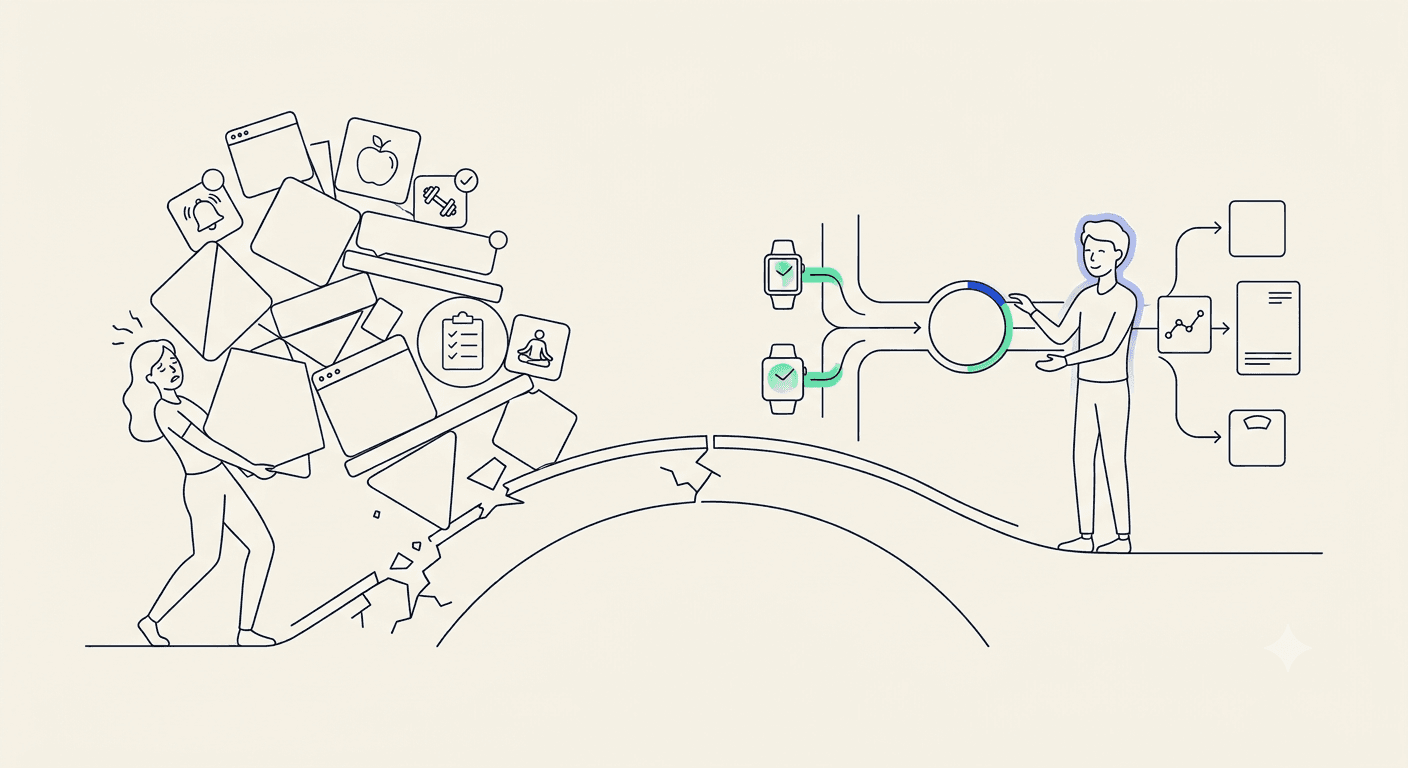
The digital health market is saturated. Every week, dozens of new applications hit the app stores, promising to fix sleep schedules, correct diets, or reduce stress. Yet, look at the retention data after 30, 60, or 90 days, and the numbers tell a grim story. A vast majority of digital health products lose up to 80% of their active users within the first week after download. For product marketers and healthtech marketers, this isn't just an engineering issue. It is a fundamental positioning, design, and strategic misalignment. Building a digital wellness product requires balancing data security, behavioral psychology, and user experience. When one of these pillars crumbles, the entire project collapses. Let's look at the specific technical and structural reasons why apps fail, the core wellness startup mistakes to avoid, and how to build a scalable architecture that keeps users coming back.
1. The Core Misalignment: Misunderstanding Behavioral Change
Many digital wellness products are built on the assumption that users fail because they lack information. If someone wants to drink more water, you just need to remind them. If they want to sleep better, you just give them a tracker.
This is the first major trap. Information alone does not change human behavior. Traditional tech logic assumes that giving a user data automatically leads to a change in habits. In reality, users face friction, experience cognitive fatigue, and quickly drop out, leading to the app being deleted.
When a health platform relies solely on notifications that say "Time to meditate!" or "Log your meals!", it creates fatigue. Users don't need digital nags; they need digital architecture that reduces friction.
The Psychology of Digital Wellness
To create a sustainable product, you have to build for the low-motivation state. When a user first downloads your app, their motivation is at a peak. They will fill out long onboarding forms, set up daily schedules, and explore every feature.
But three days later, reality hits. They are tired, busy, or stressed. If your app requires heavy manual entry or complex navigation to deliver value, it will be abandoned.
Shift from manual tracking to automated passive data ingestion. Use hardware integrations like Apple HealthKit, Google Connect, or wearable APIs to collect data in the background. The user's only job should be receiving insights, not doing data entry.
2. Health App UX Mistakes: The Friction Point
Poor design in healthtech isn't just about ugly colors or misaligned text. In this sector, health app UX mistakes mean forcing a stressed or anxious user to think too hard.
Consider a typical stress-management app. A user opens it because they are currently overwhelmed. If the first screen they see demands that they choose between twelve different audio tracks, set a timer, choose a background wallpaper, and configure their audio output, you have actively increased their cognitive load. You have failed them at the exact moment they needed your product.
Complex Onboarding vs. Value Time-to-Aha
Healthtech marketers often want to collect as much demographic and biometric data as possible during onboarding to personalize the experience. While personalization is critical, front-loading twenty questions before the user even sees the main dashboard kills conversion rates.
Data Collection (High Attrition): Mandatory 15-question form on signup.
Data Collection (High Retention): Progressive profiling over 7 days based on features used.
Permissions (High Attrition): Demanding Bluetooth, Location, and Notifications instantly.
Permissions (High Retention): Asking for permission exactly when a specific feature requires it.
Account Creation (High Attrition): Social login or email verification required before entering.
Account Creation (High Retention): Guest mode allowed, saving the account to the cloud later.
By spreading data collection throughout the user journey, you reduce initial friction and build trust before asking for sensitive health information.
3. Tech Stack Architecture and Security Flaws
You cannot build a modern wellness app using the same architecture you would use for a standard e-commerce platform or a basic content application. A frequent driver behind why apps fail in the health space is a weak technical foundation that cannot scale or protect user information.
Security and Regulatory Compliance
Even if your app is technically classified as "wellness" rather than "medical," treating user data casually is fatal. If you collect sleep patterns, menstrual cycles, stress levels, or dietary habits, users expect enterprise-grade protection.
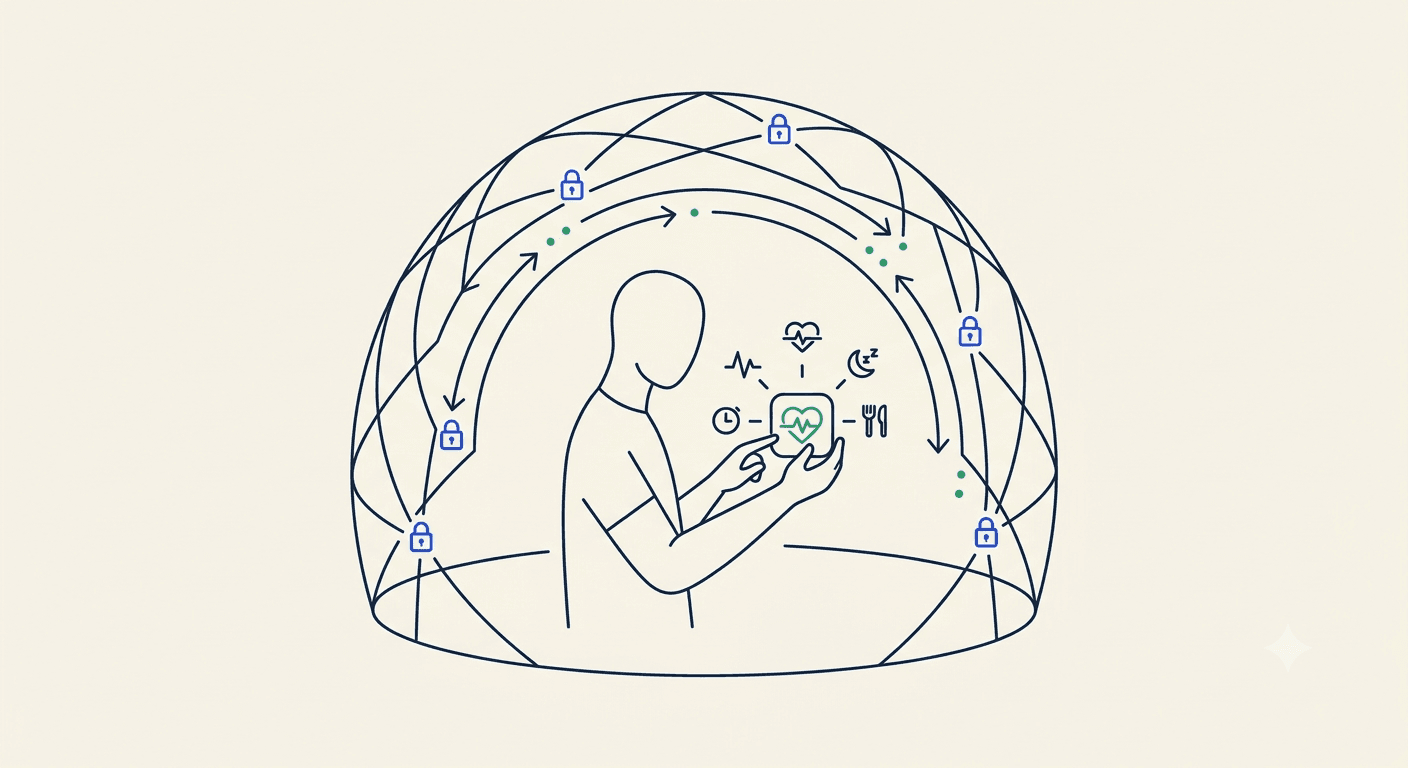
Encryption: All personal health information (PHI) must be encrypted both at rest and in transit. Using standard HTTPS isn't enough; implement end-to-end encryption for sensitive data fields.
Architecture Isolation: Keep your user authentication systems entirely separate from the biometric database. If an attacker breaches the account registry, they shouldn't automatically gain access to a user's historical mental health logs.
Regulatory Readiness: If you intend to expand from a pure B2C consumer app into B2B corporate wellness or partner with healthcare providers, your platform must be architected with HIPAA compliance principles from day one. Retrofitting an unsecure database for HIPAA or GDPR compliance later is twice as expensive as building it correctly the first time.
Choosing the Right Infrastructure
A scalable wellness platform needs an architecture that handles asynchronous data processing efficiently. If thousands of users sync their wearable devices at 8:00 AM every morning, your servers will experience massive spikes.
Using a microservices architecture allows you to isolate the data-syncing engine from the core application dashboard. If the sync service slows down under heavy load, the user can still open the app, read content, or log data manually without experiencing an application crash.
4. MVP Mistakes: Over-Engineering the First Launch
One of the most destructive wellness startup mistakes is launching a Minimum Viable Product (MVP) that is trying to do everything at once.
A startup team looks at successful market leaders and decides they need AI-driven personalized recommendations, a built-in social media community feed, live video streaming with wellness coaches, an e-commerce marketplace for supplements, and in-depth analytical dashboards for desktop and mobile.
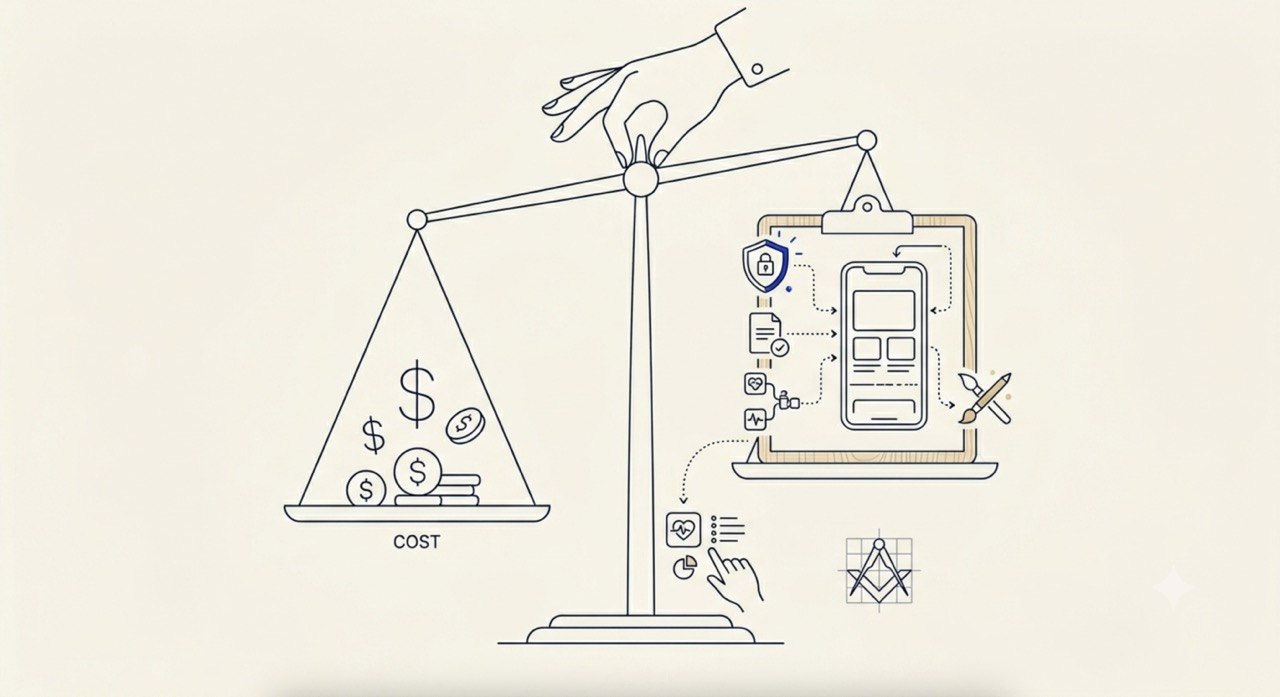
They spend twelve months and hundreds of thousands of dollars building all five systems. When they launch, they find out that users only care about the personalized recommendations, but because that feature was rushed to fit the other four in, it performs poorly. The budget is gone, and the product dies. Over-engineering creates a trap where too many features dilute the value and cause high churn, whereas a strategic MVP focuses on a highly polished core feature to validate retention before controlled expansion.
The "Core Metric" Framework for Digital Health
When planning your MVP, identify the single feature that solves the user's primary pain point. If you are building a habit tracker, the core value isn't the social feed; it’s the ease of habit logging and the clarity of the progress display.
Focus your initial budget on polishing that single loop. Ensure the response times are under 200 milliseconds, the interface requires minimal taps, and the background data sync is flawless. Once you have validated that users return to use that single feature consistently for 30 days, you can begin expanding your feature set.
5. Retention Strategies That Actually Work
Acquisition is expensive in the digital health sector. Paid advertising costs are rising, and organic app store optimization is highly competitive. If your product marketer is focused purely on top-of-funnel acquisition while the product has a retention problem, you are pouring money into a leaky bucket.
To move past basic push notifications, you need to implement systemic retention loops within the platform's core architecture.
Variable Rewards and Gamification Done Right
Gamification is often misunderstood as adding badges, points, and leaderboards to an app. But tracking a serious health condition or managing chronic stress doesn't always align with cartoonish achievements. Misapplied gamification can feel cheap and alienate users.
Instead, focus on internal progress loops: the user logs a metric, the system shows a historical correlation, and the user invests in setting tomorrow's goal.
When a user logs their mood and your system immediately shows them a correlation—such as noting a 20% drop in anxiety on days they logged 8,000 steps—you have provided immediate, actionable value. The user is now invested in logging data tomorrow to see if that trend holds true. You have transformed data entry from a chore into a tool for self-discovery.
Contextual Context-Aware Notifications
Standard notifications are ignored. Smart notifications use real-time data to intervene at the right moment.
If your fitness app detects via API that it is currently raining heavily at the user's location, sending a notification saying "Go outside for a run!" shows a complete lack of context. A smart system checks local weather data, recognizes the rain, and shifts the recommendation to a 10-minute indoor mobility routine. This contextual awareness builds trust and demonstrates that the application understands the user's current environment.
6. The B2B Shift: Scaling Past the App Store
Many wellness applications start as direct-to-consumer (D2C) products but eventually realize that long-term financial sustainability lies in B2B2C—selling to employers, insurance companies, or healthcare networks as a corporate benefit or clinical support tool.
If your technical architecture isn't prepared for this transition, you will lose major contracts to competitors. Your app needs to be able to route from standard app stores toward corporate wellness networks using HR portals and SAML SSO, or into clinical integration with EHR systems and medical APIs.
Enterprise Requirements for Wellness Apps
To close corporate or clinical deals, your engineering and product teams must be able to check several specific boxes:
Single Sign-On (SSO): Corporate clients will require your app to integrate with their existing identity providers (like Okta, Azure AD, or Ping Identity) via SAML 2.0 or OIDC. Users should be able to log in using their work credentials securely without creating secondary passwords.
Anonymized Reporting Dashboards: HR managers want to see usage metrics to justify their investment. They want to know that 40% of their workforce is using the stress management module, but they must never be able to see individual user data or specific scores. Your architecture must support aggregated data queries while keeping individual records strictly isolated.
Interoperability Standards: If your app crosses into clinical health, you will eventually need to interface with Electronic Health Records (EHR) systems. Building your data structures to map easily to modern health IT standards like HL7 and FHIR (Fast Healthcare Interoperability Resources) early on saves massive amounts of development time down the road.
7. Product Auditing Checklist for Marketers and PMs
Before launching a new feature or spinning up a marketing campaign for your wellness app, run your current build through this structural checklist to ensure you aren't walking into standard industry pitfalls.
1. The Friction Audit
Can a user experience the core value proposition within 90 seconds of downloading the app?
Are there non-essential text fields in the signup flow that can be moved to a later date?
Can the user bypass account creation entirely to try out the main dashboard?
2. The Data Integration Audit
Does the app rely heavily on the user manually typing in metrics every day?
Are Apple HealthKit and Google Connect APIs integrated to handle background data collection?
Is there an elegant fallback option if a user denies wearable data permissions?
3. Infrastructure & Security Audit
Is personal identifiable information (PII) stored separately from biometric data records?
Do database connection strings, API keys, and sensitive tokens reside outside the main repository code?
Is the current architecture ready to export or delete a user's entire data profile instantly if requested under GDPR or CCPA rules?
Building Things That Last
The wellness platforms that thrive over the next decade will not be the ones with the most aggressive marketing or flashy graphics. Success belongs to products built on deep technical stability, rigorous data privacy, and an accurate understanding of human habits.
By removing unnecessary friction during onboarding, avoiding over-engineered MVPs, protecting user privacy at an enterprise level, and utilizing automated background data integrations, you build an ecosystem that users trust over the long term.
Avoid costly mistakes with the right product strategy.
Building a wellness app that scales requires deep industry knowledge and an uncompromising approach to technical architecture. At CipherCross, we engineer user-centric wellness platforms backed by secure, scalable infrastructure and real healthtech expertise. Let's build something your users will rely on every day.
Explore our end-to-end services.
Dive into our diverse articles – from wellness app design and AI personalization to software development best practices, operational workflows, and strategic guidance.




Load More