
Top 10 Features Every Successful Wellness App Must Have

Mykyta Shevchenko
CEO & Co-founder

The healthtech landscape is highly saturated. Users have thousands of options available when searching for digital health solutions, yet user retention rates in the wellness sector frequently plummet after the first thirty days. Product marketers and healthtech developers constantly evaluate what separates an application that becomes a daily habit from one that is uninstalled after a single use. The differentiator is rarely the core concept. Instead, success hinges on the precise execution of specific wellness app features that prioritize user outcomes, seamless integration into daily routines, and highly personalized experiences. The market has shifted away from basic digital diaries that simply record data. Modern users expect intelligent systems that analyze their behavior and provide actionable insights. Developing a comprehensive product roadmap requires understanding which elements drive engagement and which merely add technical debt. This article examines the essential features required to build, scale, and sustain a competitive health and wellness application.
1. Predictive Personalization Engines
Static applications that offer the same experience to every user cannot compete in the current healthtech environment. The shift from basic wellness tracking to predictive modeling marks a significant evolution in digital health.
A predictive personalization engine utilizes machine learning algorithms to analyze a user’s historical data and anticipate their future needs. Instead of waiting for a user to log their mood or log a workout, the application proactively adjusts its interface and recommendations based on behavioral patterns.
Implementation Details:
Behavioral Pattern Recognition: The system analyzes when a user is most active, when they tend to skip habits, and what content they consume.
Dynamic UI Adjustments:
If a user consistently ignores video workouts but engages with audio-guided meditation, the app's dashboard should automatically prioritize audio content.
Proactive Interventions:
By analyzing sleep patterns and physical activity, predictive models can suggest a rest day or a specific stretching routine before the user experiences burnout or injury.
For product marketers, emphasizing predictive capabilities shifts the product narrative from a "tool you use" to a "partner that understands you." It directly addresses churn by ensuring the application remains relevant as the user’s fitness level or mental health state fluctuates.
2. Frictionless, Progressive Onboarding (Health App UX)
The initial interaction with a wellness app dictates its long-term success. A common critical error is presenting new users with exhaustive questionnaires immediately upon downloading the application. While gathering baseline health data is necessary for personalization, demanding thirty data points upfront creates massive friction.
Optimal health app UX relies on progressive profiling. This method collects essential data gradually as the user navigates the application over several days or weeks.
Strategic Onboarding Elements:
Core Goal Identification: The first screen should only ask for the primary objective (e.g., stress reduction, marathon training, sleep improvement).
Contextual Data Requests: Instead of asking for dietary restrictions during account creation, the app prompts for this information only when the user navigates to the meal planning section.
Interactive Tutorials: Rather than static overlay screens explaining how to use the app, the onboarding process should guide the user to complete their first core action, such as logging a single meal or completing a one-minute breathing exercise.
Reducing cognitive load during the first five minutes of usage significantly increases the likelihood that a user will return the following day.
3. Advanced API Integrations (Wearables and IoT)
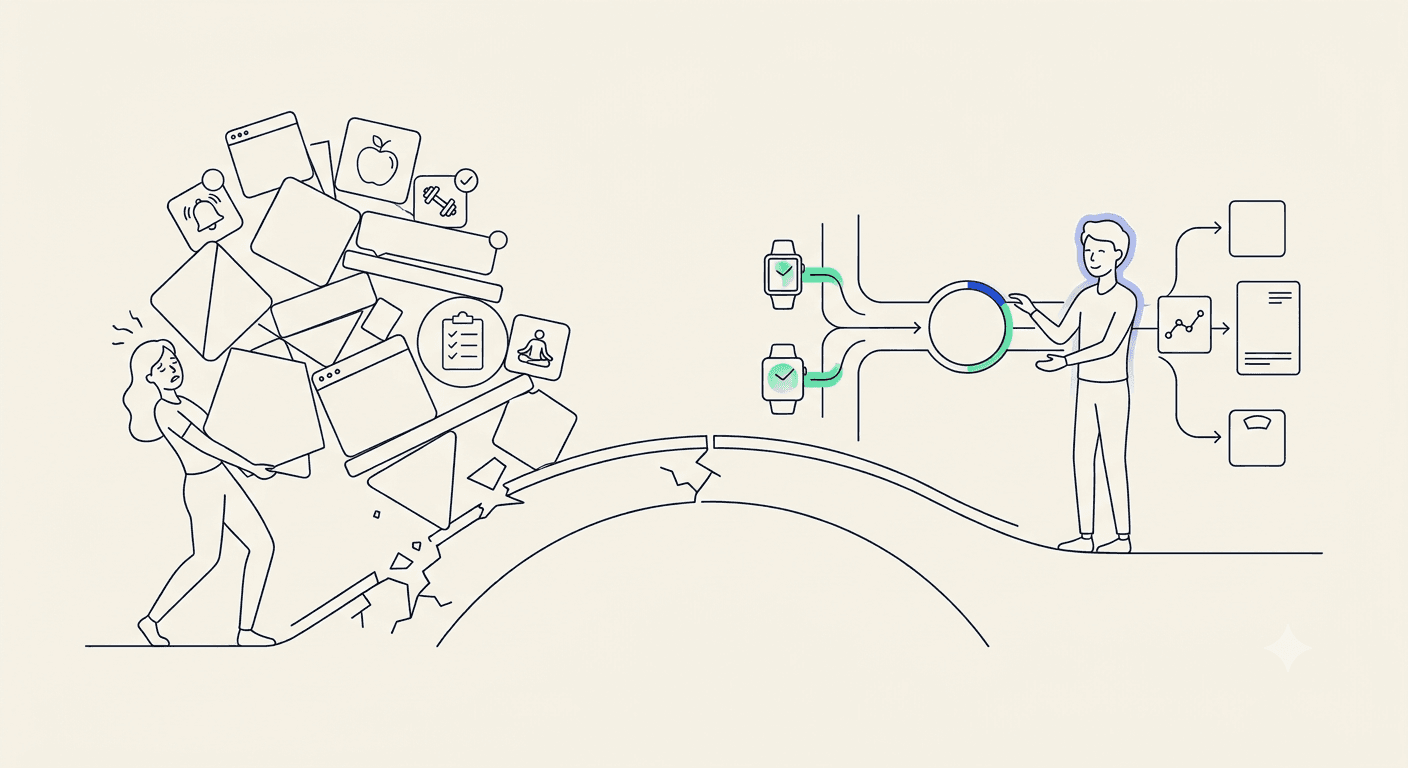
Users do not want to manually input data that their smartwatch or fitness ring is already tracking. A wellness app isolated from the broader hardware ecosystem creates unnecessary work for the user.
Integrating with established frameworks like Apple HealthKit, Google Fit, and specific OEM APIs (Garmin, Oura) is a fundamental requirement for comprehensive fitness app features.
Key Technical Considerations:
Real-time Data Syncing: Ensuring that step counts, heart rate variability (HRV), and sleep stages are pulled directly from hardware to populate the app’s dashboard instantly.
Bidirectional Data Flow: Not only pulling data from wearables but also pushing data back. For example, logging a meditation session in your mental health app should reflect in the user’s Apple Health "Mindful Minutes."
Battery Optimization: Efficient background syncing protocols are necessary to prevent the app from draining the user's mobile device or wearable battery.
Marketers can leverage these integrations to highlight the app as a centralized hub for all of a user's health metrics, consolidating fragmented data into a single, understandable interface.
4. Specialized Mental Health App Features
Whether an application is strictly focused on cognitive behavioral therapy (CBT) or is a general fitness platform, incorporating mental health app features is becoming an industry standard. Physical and mental well-being are intrinsically linked, and users expect a holistic approach.
Crucial Mental Health Components:
Secure, Encrypted Journaling: Providing a safe space for users to log thoughts, with strict privacy protocols ensuring this data is completely anonymized or locally stored.
Mood Correlation Tracking: Allowing users to log their emotional state and using algorithms to cross-reference this data with their physical activity, sleep, and nutritional intake to identify triggers.
Crisis Protocols: Applications dealing with mental health must include immediate, accessible links to emergency resources and hotlines. This is a critical ethical and safety requirement.
Audio/Visual Grounding Tools: Implementing quick, accessible exercises such as guided box breathing or bilateral stimulation sounds for users experiencing acute anxiety.
Integrating these tools demonstrates a comprehensive understanding of human health, appealing to a demographic that values holistic wellness over pure physical metrics.
5. Intelligent Actionable Notifications
Push notifications are frequently cited as the primary reason users delete applications. Generic alerts asking users to "come back and check out new content" are disruptive and provide zero value.
Successful wellness apps utilize intelligent, trigger-based notification systems. The communication must be contextual, timely, and offer an immediate benefit.
Designing Effective Triggers:
Biological Triggers: "Your resting heart rate is 5% lower than your weekly average. You are primed for a high-intensity workout today."
Environmental Triggers: Utilizing local weather APIs to suggest an indoor cycling session instead of a run when it is raining.
Behavioral Triggers: If a user consistently logs their meals at 1:00 PM, a gentle reminder at 1:15 PM if they forget is helpful; a reminder at 4:00 PM is irrelevant.
From a marketing perspective, redefining notifications as "health insights" rather than "reminders" completely alters user perception, transforming a potential annoyance into a highly valued feature.
6. Granular Fitness App Features and Offline Modes
For applications involving physical training, the specific utility of the fitness app features determines user reliance. An app used in a gym environment or on a remote hiking trail must function seamlessly regardless of internet connectivity.
Essential Fitness Capabilities:
Offline Data Caching: Users must be able to download video routines, audio guides, and workout plans locally. The app should queue logged data offline and automatically sync with servers once a connection is re-established.
Dynamic Rep and Weight Algorithms: Instead of static workout plans, the app should calculate the next logical weight progression based on the user's previous logged performance (e.g., calculating the 1-Rep Max).
Customizable Interval Timers: Providing granular control over work-to-rest ratios, auditory cues (whistles, voice coaching), and visual timers that are visible from a distance while the phone is on the floor.
Providing robust offline capabilities ensures the application remains functional in the exact environments where users need it most, preventing frustration and abandonment.
7. Scalable and Transparent Data Security
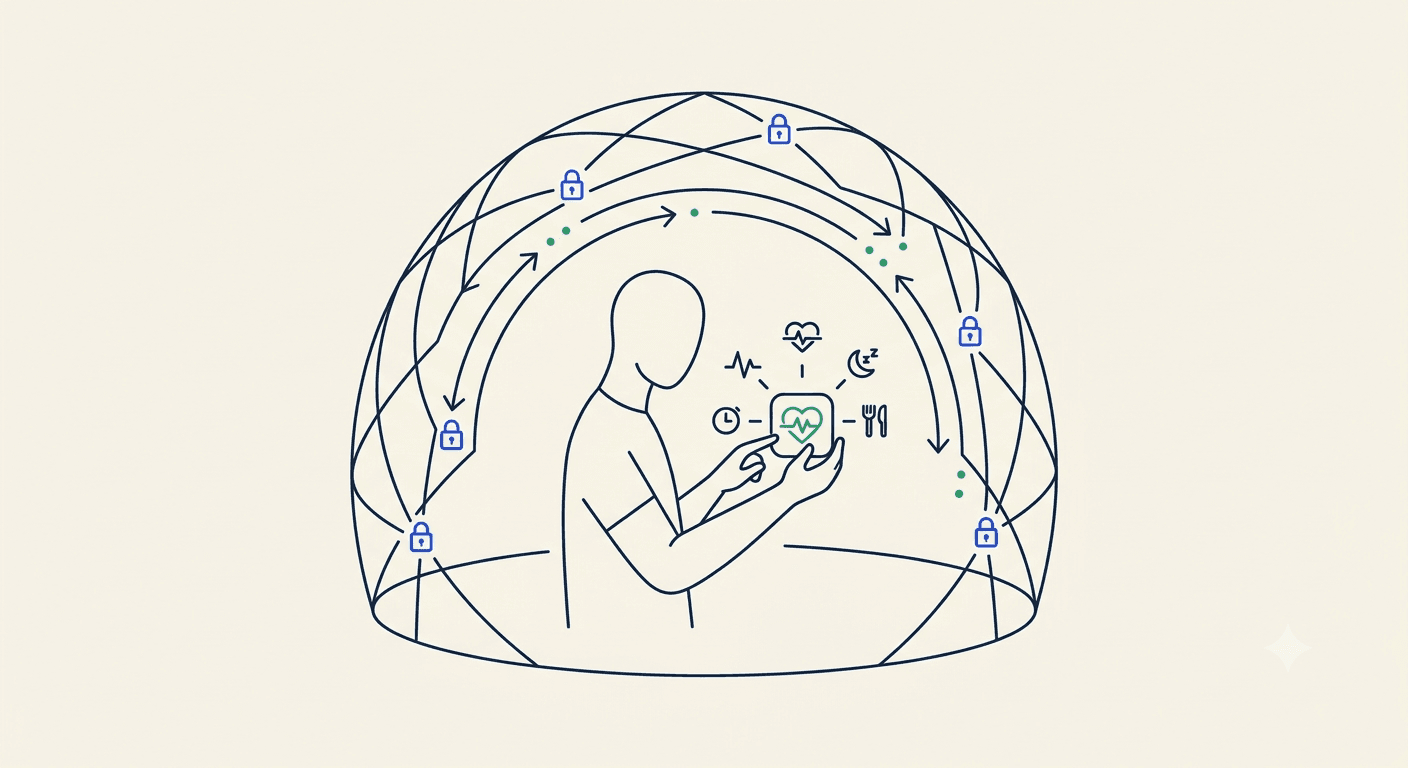
Health data is the most sensitive information a consumer possesses. Trust is the foundation of any healthtech product. If a user questions the security of their data, they will not input accurate information, rendering the application useless.
Robust security architecture must be built into the foundation of the app, not added as a subsequent patch.
Security Requirements:
Regulatory Compliance: Adherence to HIPAA (in the US), GDPR (in Europe), and other regional data protection regulations is mandatory.
End-to-End Encryption: Data must be encrypted both in transit (while moving from the device to the server) and at rest (stored in the database).
Granular User Permissions: Users must have total control over what data is collected, who it is shared with, and the ability to permanently delete their account and associated data with a single action.
Product marketers must prioritize translating these complex security architectures into clear, user-facing guarantees. Transparent privacy policies presented in accessible language build consumer confidence and facilitate adoption.
8. Meaningful Data Visualization and Dashboards
Collecting thousands of data points is counterproductive if the user cannot interpret them. A common flaw in health app UX is presenting raw data without context. A user seeing a line graph of their daily step count might not understand the broader health implications.
Dashboards must translate raw metrics into actionable narratives.
Effective Data Visualization:
Contextual Benchmarks: Comparing a user's data to their own historical averages rather than generic demographic averages. "Your sleep score improved by 10% this month" is more motivating than "You sleep less than the average 30-year-old."
Correlation Mapping: Visually demonstrating the relationship between different habits. For instance, overlaying a graph of sugar intake with sleep quality to highlight direct correlations.
Clear Information Hierarchy: The main dashboard should highlight the 2-3 most critical metrics relevant to the user's stated goal, hiding secondary data points behind expandable menus to avoid visual clutter.
By focusing on insights rather than just numbers, the application proves its ongoing value, giving users a tangible reason to log in daily.
9. Community and Social Accountability Layers
While health journeys are highly personal, isolation often leads to a drop in motivation. Integrating social features requires a delicate balance; it must provide accountability without fostering toxic comparisons.
Constructing Positive Social Features:
Micro-Communities: Allowing users to create small, private groups with friends or family members for shared challenges, rather than massive public leaderboards that can be demotivating for beginners.
Shared Goal Tracking: Enabling collaborative goals, such as a group aiming to collectively walk 100 miles in a week, fostering teamwork rather than direct competition.
Expert Access and Telehealth Integration: Bridging the gap between peer community and professional support. Offering direct messaging or booking APIs to connect users with registered dietitians, therapists, or personal trainers directly within the platform.
Social features transform a solitary utility into a network, significantly increasing the switching costs for users considering leaving the platform.
10. Seamless Transition from Web to Mobile (Web2Mob)
Many health and wellness SaaS companies initially launch as robust web applications. However, user behavior in the wellness sector is inherently mobile. People track meals at restaurants, log workouts at the gym, and listen to meditations in bed.
A successful wellness application often requires a deliberate and smooth transition from a web-first platform to a dedicated mobile app experience.
Web-to-Mobile Strategies:
Feature Parity vs. Feature Optimization: A mobile app should not be a cramped version of a desktop dashboard. It requires redesigning workflows specifically for touch interfaces and smaller screens.
Unified Account Syncing: Users should be able to start a complex task (like setting up a detailed monthly meal plan) on the web app and have it instantly available and executable on their mobile device.
Leveraging Native Device Capabilities: The mobile application must utilize native OS features like the camera (for barcode scanning nutritional info), GPS (for route tracking), and haptic feedback, which are unavailable or clunky on web platforms.
Recognizing the mobile-first nature of wellness allows companies to position their product exactly where the user is physically present during their health activities.
Building an application that genuinely improves user health requires moving beyond standard templates. The market demands highly specific wellness app features that prioritize accurate data interpretation, strict security, and an interface that anticipates user behavior. By focusing resources on predictive modeling, intelligent integrations, and optimized health app UX, developers can construct platforms that users rely on consistently over years, rather than days.
See how we prioritize features based on user behavior and outcomes.
Dive into our diverse articles – from wellness app design and AI personalization to software development best practices, operational workflows, and strategic guidance.



Load More