
Wellness Marketing in 2026: How to Attract Users Beyond Downloads

Mykyta Shevchenko
CEO & Co-founder
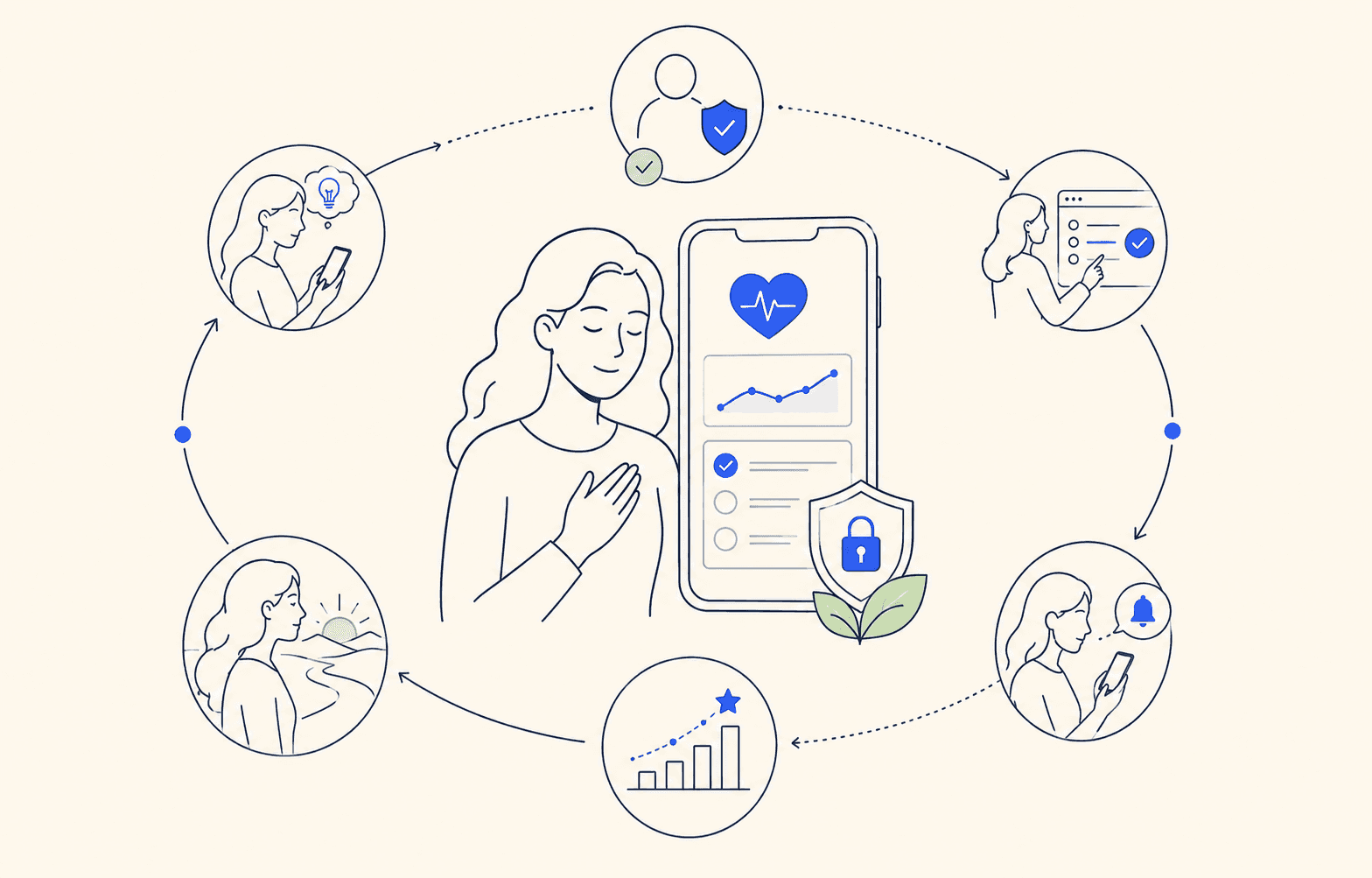
Wellness marketing trends, app user acquisition, and retention strategies are no longer separate disciplines. In 2026, they intersect around a single, practical problem: how to design and market wellness products that remain relevant after the first weeks of use. Install numbers still indicate visibility, but they no longer reflect product success. What matters now is whether users understand the value of the app, trust how it operates, and continue to use it as part of their routine over time. This article examines how wellness marketing has evolved, which acquisition and retention approaches still deliver results, and how HealthTech marketers can adjust their strategies to drive long-term adoption rather than short-term downloads.
The Wellness App Market in 2026: What’s Different Now
The wellness app market in 2026 is crowded, heavily regulated, and more transparent than ever. Users no longer evaluate apps based solely on features—they expect reliability, clarity, and measurable value.
Today’s users typically assume:
Functional parity: Most wellness apps offer similar core capabilities, from habit tracking to sleep analysis.
AI-supported insights: Personalized recommendations or predictive analytics are increasingly standard, not optional.
Data transparency: Users want to know exactly how their health information is collected, stored, and used.
As a result, competitive advantage no longer comes from features alone. Successful marketing focuses on how the app integrates into users’ daily routines, supports their goals, and maintains trust over time.
For HealthTech marketers, this means shifting from feature-driven promotion to educational communication that explains product value, use cases, and data practices in a way users can immediately understand and act on.
Why Downloads No Longer Signal Growth
High installation volumes are no longer a reliable proxy for product success. Even with strong initial traction, wellness apps frequently encounter several structural challenges:
Early churn: A significant share of users drop off before completing onboarding or fully understanding the app’s value proposition.
Feature underutilization: Core functionalities—such as habit tracking or personalized insights—often remain unused or only partially explored.
Rapid decline in engagement: User activity typically decreases sharply within the first week, undermining long-term retention metrics.
This pattern is particularly pronounced in the wellness segment. Users tend to download apps during periods of heightened motivation—triggered by personal goals or health concerns—but disengage once sustained effort and consistency are required.
As a result, modern user acquisition strategies are shifting from volume-driven approaches to quality-focused growth. The emphasis is now on attracting users with a higher likelihood of long-term engagement. In this context, success is defined not by the number of installs, but by the depth, consistency, and sustainability of user interaction.
Wellness Marketing Trends Defining 2026
Trust-First Messaging
Users increasingly approach wellness apps through a risk-aware lens, evaluating not only functionality but also psychological and data-related safety. Common user concerns include:
Is my personal and health data secure?
Will this app support my goals without adding pressure or anxiety?
Do I have control over features, data sharing, and notifications?
In response, leading wellness companies are transitioning from generic value propositions to trust-centered communication strategies, which include:
Clear and structured onboarding that explains how the product works and what users should expect.
Plain-language privacy communication outlining data collection, storage, and sharing practices.
Transparent positioning of AI-driven features, distinguishing between automated recommendations and human-curated input.
By 2026, trust functions not only as a brand attribute but as a measurable driver of both conversion and retention.
Educational Content as a Growth and Retention Lever
SEO-driven content has evolved beyond traffic acquisition into a strategic tool for user education and retention. High-performing wellness brands use content to reduce uncertainty, build confidence, and guide user behavior.
Effective content typically:
Translates app metrics and insights into clear, actionable guidance.
Addresses user concerns related to data usage, personalization, and AI-based recommendations.
Helps users interpret progress realistically, minimizing frustration and misaligned expectations.
By improving user understanding and perceived control, educational content directly contributes to higher engagement, stronger loyalty, and increased lifetime value.
Retention Begins Before Installation
User retention is no longer confined to post-install interactions—it is shaped at the pre-acquisition stage. Key touchpoints include:
Landing pages that clearly communicate value, required effort, and expected outcomes.
App store descriptions that accurately reflect core features and user experience.
First-touch marketing content that sets realistic and transparent expectations.
When there is a mismatch between marketing promises and actual product capabilities, early disengagement becomes significantly more likely. Therefore, in 2026, effective wellness marketing teams operate in close alignment with product and UX functions, ensuring that messaging accurately reflects the real user experience from the very first interaction.
Understanding the 2026 Wellness App User
Today’s wellness app users are informed and selective. They tend to be:
Curious but cautious: They explore new features but evaluate risks before fully engaging.
Open to experimentation, not blind commitment: Users try multiple apps or approaches, comparing value before adopting one long-term.
Sensitive to pressure-based engagement: Aggressive reminders or forced streaks often backfire, causing churn.
These users consistently prioritize:
Context over motivation: They want guidance that fits their lifestyle, not generic “push to act” messages.
Control over automation: Features should be optional and customizable rather than mandatory.
Progress over perfection: Users appreciate incremental improvements rather than instant transformations.
Marketing strategies that reflect these preferences—through clear messaging, educational content, and flexible onboarding—tend to increase both acquisition quality and long-term retention, creating a more engaged and loyal user base.
App User Acquisition Without Over-Reliance on Paid Ads
The Limits of Performance Marketing
The effectiveness of paid acquisition is steadily declining as costs increase and user quality becomes less predictable. Performance-driven campaigns frequently attract:
Users simultaneously testing multiple apps
Short-term explorers with low commitment
Price-sensitive audiences with limited long-term value
This dynamic creates a growing misalignment between acquisition costs and user lifetime value (LTV), reducing overall marketing efficiency.
Content-Led Acquisition as a Qualification Mechanism
In 2026, one of the most effective acquisition strategies is content-driven qualification, where marketing assets actively filter for user intent and readiness.
High-performing formats include:
In-depth blog articles addressing specific user problems and questions
Product pages that explain real workflows and user journeys—not just benefits
Detailed use-case breakdowns tailored to distinct wellness needs
Such content attracts users who better understand the effort and consistency required, resulting in higher post-install engagement and retention.
Retention Strategies Built for Long-Term Use
Personalization With Clear Boundaries
While personalization remains a key retention driver, users increasingly expect transparency and control over how their data is used.
Effective strategies include:
Clearly explaining what data is collected and for what purpose
Allowing users to adjust or limit personalization settings
Avoiding excessive or non-essential tracking
From a marketing perspective, personalization should be framed as optional and value-enhancing, rather than a default requirement.
Replacing Pressure With Education
Traditional engagement tactics based on pressure—such as streaks, reminders, and constant nudges—are losing effectiveness and can contribute to user fatigue.
Modern wellness apps improve retention by:
Explaining insights before prompting action
Offering recommendations as optional, not prescriptive
Respecting breaks, irregular usage, and changing user behavior
This approach reduces burnout and supports more sustainable engagement patterns.
Framing Wellness as a Long-Term Relationship
Retention improves when users perceive value as cumulative rather than immediate.
Effective marketing narratives emphasize:
Historical insights and patterns over time
Adaptive and evolving recommendations
Longitudinal tracking of progress
This reframes the product from a short-term performance tool into a continuous support system aligned with long-term well-being.
Data Ethics as a Competitive Advantage
By 2026, data responsibility is a key factor in user decision-making. Users actively assess how applications collect, store, and use their data.
Strong wellness marketing strategies therefore highlight:
Transparent data storage and handling practices
Robust security standards
Clear user rights, including control over data access and usage
For companies like CipherCross, secure and scalable architecture is no longer just a technical foundation—it becomes an integral part of the product’s value proposition and a differentiating factor in the market.
Aligning Marketing, Product, and UX
High-performing wellness teams operate through tightly integrated cross-functional collaboration, eliminating traditional silos between marketing, product, and UX. In this model:
Marketing insights directly inform feature prioritization, onboarding design, and in-app education
Product updates continuously refine messaging, positioning, and content strategy
This iterative feedback loop ensures consistency, accuracy, and credibility across all user touchpoints, strengthening both user trust and overall experience.
Metrics That Matter More Than Installs
Modern wellness marketing has shifted toward value-oriented performance indicators that better reflect real user behavior and product impact. Key metrics include:
Activation quality: the depth and effectiveness of initial user engagement
Feature adoption trends: how consistently users interact with core functionalities
Post-signup content engagement: the role of educational content in driving continued usage
Similarly, SEO performance is evaluated through metrics such as:
Return visits
Time on page
Correlation with user retention
These indicators provide a more accurate measure of sustainable growth compared to surface-level metrics like install volume.
Common Adoption Barriers to Address Early
Even well-designed products can underperform if marketing communication fails to align with user expectations. Common barriers include:
Overly abstract or vague language
Misaligned expectations between marketing and actual product experience
Inconsistent tone across content and in-app interactions
The most effective mitigation strategies remain straightforward: clear explanations, concrete use cases, and transparent positioning.
What’s Next for Wellness Marketing
Emerging trends indicate a continued evolution toward more responsible, user-centric approaches. Key directions include:
Increased emphasis on explainable AI, ensuring users understand how recommendations are generated
Closer collaboration with compliance and data governance teams
Expanded user-led customization, giving individuals greater control over their experience
Organizations that prioritize clarity, trust, and long-term value creation will be better positioned to meet rising user expectations.
Conclusion: Marketing as Ongoing Support
By 2026, wellness marketing has fundamentally shifted from a persuasion-driven function to a support-oriented discipline. Its primary role is to:
Enable informed user decision-making
Support sustainable behavior change
Respect user autonomy and data privacy
When marketing operates with the same level of intentionality and care as product development, it becomes an integral part of the user experience—extending beyond acquisition into a continuous, value-driven relationship.
Want to stay ahead of wellness marketing trends and retention strategies?
Subscribe for trend updates and insights from teams building secure, user-centric wellness apps at scale.
Dive into our diverse articles – from wellness app design and AI personalization to software development best practices, operational workflows, and strategic guidance.




Load More