
Data Security in Health & Wellness Apps: What Businesses Need to Know

Mykyta Shevchenko
CEO & Co-founder
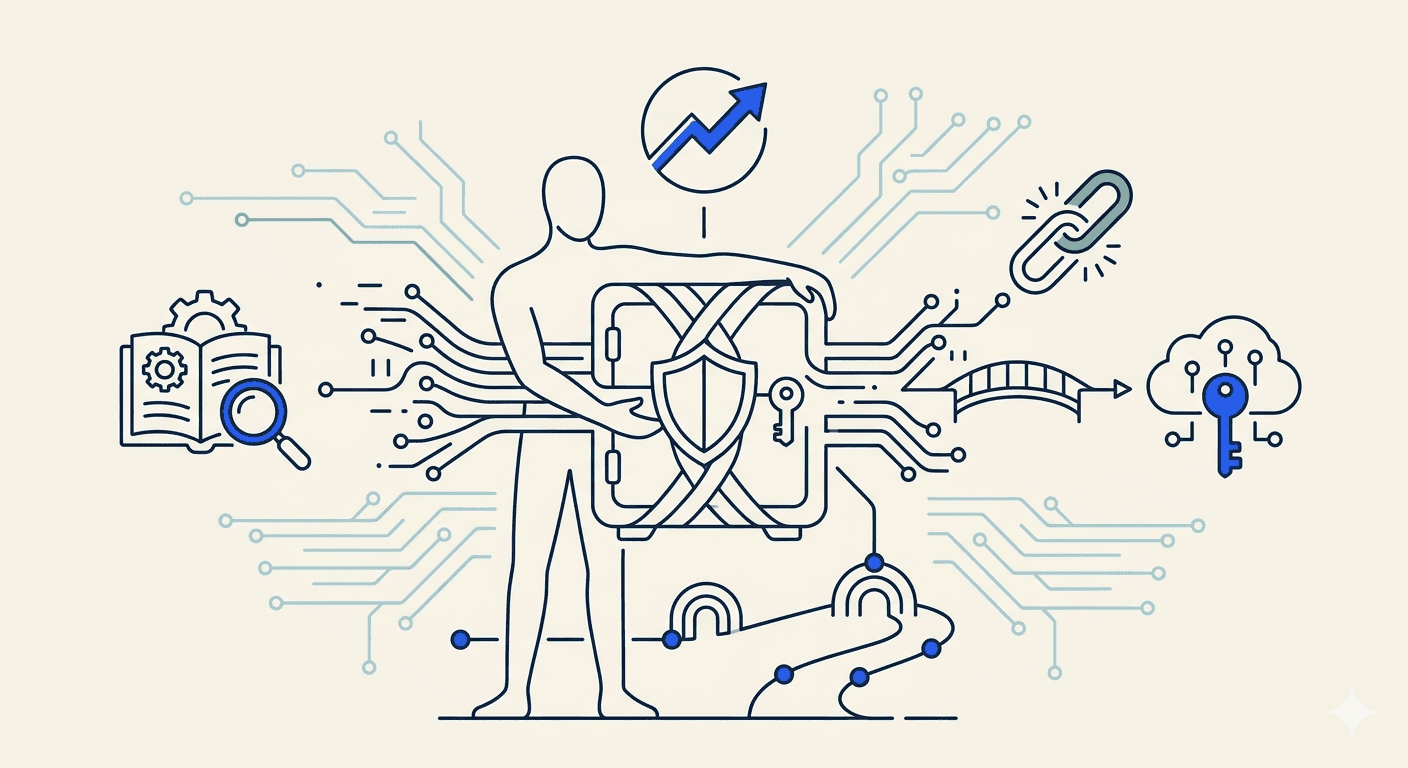
Digital wellness is no longer a niche. From mental health tracking to fitness coaching and chronic condition support, wellness apps are now part of everyday life. But as functionality grows, so does responsibility. If your product collects sleep patterns, stress indicators, nutrition logs, therapy notes, or biometric data, you’re handling information that users consider deeply personal. One misstep in wellness app data security can damage trust, trigger regulatory penalties, and stall growth. For CTOs, compliance officers, and HealthTech founders, data protection is not just a legal checkbox. It's a product strategy. This article breaks down what businesses need to know about securing data in health and wellness applications — including regulatory frameworks such as GDPR and HIPAA, technical safeguards, architectural decisions, and practical steps to protect user privacy without slowing innovation.
Why Data Security in Wellness Apps Is Different
Health and wellness apps sit in a gray zone between lifestyle and medical technology. Some products clearly fall under healthcare regulations. Others operate outside strict medical classifications — yet still process sensitive data.
Here’s what makes this domain complex:
Wellness data often reveals physical and mental conditions.
Behavioral data can indirectly expose health risks.
Users expect medical-grade confidentiality, even when not legally required.
Integrations with wearables and third-party services expand the attack surface.
For example, a meditation app that tracks anxiety levels might not be a regulated medical device. But if that data leaks, the reputational impact can be severe.
Security in this sector must account for both compliance requirements and user expectations.
Understanding the Regulatory Landscape
GDPR (General Data Protection Regulation)
The General Data Protection Regulation applies to any company processing personal data of EU residents — regardless of where the company is based.
Under GDPR:
Health data is classified as “special category data.”
Explicit consent is required for processing.
Users have rights to access, rectify, delete, and port their data.
Data minimization is mandatory.
Breach notifications must be reported within 72 hours.
For wellness platforms operating globally, GDPR often becomes the baseline standard.
Key takeaway: If your app serves European users, privacy by design is not optional.
HIPAA (Health Insurance Portability and Accountability Act)
In the United States, the Health Insurance Portability and Accountability Act regulates the protection of Protected Health Information (PHI).
However, HIPAA applies only when:
You are a covered entity (healthcare provider, insurer, clearinghouse), or
You act as a business associate handling PHI on behalf of one.
Many wellness startups assume HIPAA does not apply — and sometimes they’re correct. But the line can blur when:
Integrating with healthcare providers
Offering employer-sponsored health programs
Partnering with clinics
Processing clinical data
Even when HIPAA does not legally apply, adopting its safeguards strengthens user privacy and enterprise readiness.
Wellness App Data Security: Core Risk Areas
Building a secure wellness platform requires a structured approach to risk mapping. The most critical vulnerabilities typically emerge across several key layers of the system:
1. Data Collection
Excessive or unstructured data collection significantly increases exposure to security and compliance risks. Common issues include:
Storing raw biometric data streams without aggregation or minimization
Retaining unused historical logs beyond their functional value
Collecting geolocation data without a clear use case
Keeping sensitive inputs (e.g., mental health notes) longer than necessary
Best practice: implement a data purpose matrix that explicitly defines, for each data point, its purpose, retention period, and access permissions. This ensures alignment with data minimization principles and reduces unnecessary risk.
2. Third-Party Integrations
Wellness applications frequently rely on external services, such as:
Wearable device integrations
Payment systems
Analytics platforms
Cloud storage providers
Telehealth solutions
Each integration introduces an additional attack surface. Even if the core system is secure, vulnerabilities within third-party SDKs or APIs can compromise the entire ecosystem.
Security controls should include:
Comprehensive vendor risk assessments
Formal Data Processing Agreements (DPAs)
Restriction of shared data to only essential fields
Continuous monitoring of API activity
Strong token lifecycle and access management
3. Cloud Infrastructure Misconfiguration
Cloud environments enable scalability but remain one of the most common sources of data breaches due to configuration errors. Typical risks include exposed storage, open network ports, and overly permissive identity policies.
Recommended controls:
Role-Based Access Control (RBAC)
End-to-end encryption (data at rest and in transit)
Continuous configuration auditing and monitoring
регулярне penetration testing
Adoption of zero-trust architecture principles
4. Internal Access Controls
Security risks are not limited to external threats—internal processes and access management often represent significant vulnerabilities. Common issues include:
Overly broad permissions for engineering or admin roles
Use of shared credentials
Insufficient logging and monitoring of access
Ineffective offboarding procedures
To mitigate these risks, organizations should enforce:
The principle of least privilege
Mandatory multi-factor authentication (MFA)
Comprehensive audit logging
Automated access revocation workflows
Data Encryption: Beyond the Basics
While encryption is widely recognized as essential, its implementation is often fragmented rather than systematic.
In Transit
All communications—external and internal—should be secured using TLS 1.2 or higher, without exceptions.
At Rest
Databases storing sensitive or health-related data must apply strong encryption standards such as AES-256, ensuring data remains protected even in the event of unauthorized access.
On Device
Mobile applications should:
Minimize or avoid storing raw health data locally
Use secure storage mechanisms (e.g., encrypted keychains)
Protect backups to prevent unintended data exposure
Importantly, encryption alone does not guarantee security. The effectiveness of encryption is highly dependent on robust key management practices, including secure generation, storage, rotation, and access control.
Designing for Privacy by Architecture
Security and privacy cannot be effectively retrofitted after product development. Instead, they must be embedded at the architectural level from the outset.
A privacy-by-design approach ensures that data protection principles—such as minimization, transparency, and user control—are integrated into system logic, user flows, and infrastructure decisions. This not only reduces risk but also strengthens user trust and regulatory compliance over time.
Data Minimization Architecture
A secure wellness platform starts with careful data minimization. Rather than storing every metric or raw sensor log, apps can focus on aggregated scores, anonymized datasets, or use differential privacy techniques for research. This approach not only reduces the potential impact of breaches but also simplifies regulatory compliance and overall data governance.
Separating personally identifiable information from health data is another key architectural principle. By storing PII in a separate database and linking it to health records through pseudonymous identifiers, access can be tightly controlled. In case of a breach, attackers cannot easily connect identities to sensitive health information, limiting potential exposure.
Comprehensive auditability and logging are equally important. A well-designed system tracks all data access, exports, consent updates, and administrative actions, storing logs in an immutable and secure manner. This supports regulatory compliance and ensures forensic readiness if issues arise.
User Privacy as a Product Feature
User privacy is increasingly seen as a differentiator rather than just a compliance requirement. Modern users want to know who can see their data, whether it is shared with third parties, if they can delete it permanently, and whether AI models use their personal logs. Platforms that provide clear answers through in-app privacy dashboards, downloadable reports, granular consent controls, and plain-language explanations foster trust. Intuitive privacy experiences also reduce support requests and improve retention.
AI and Machine Learning: New Security Considerations
Many wellness apps now leverage AI for personalized recommendations, behavioral insights, mental health support, or predictive risk scoring. This introduces unique security challenges. During model training, identifiable data must be anonymized, and training datasets should not be retained indefinitely. Production and training environments should remain separate to prevent accidental leaks. When AI models generate outputs, risks include data exposure via prompt injection, overexposed APIs, or potential reverse engineering of sensitive datasets. Best practices include using de-identified data, documenting data lineage, conducting AI-specific security testing, and establishing clear AI governance policies.
Incident Response and Data Lifecycle Management
Security incidents are not hypothetical—they are a matter of when, not if. A robust incident response plan should include clear escalation paths, legal consultation protocols, communication templates, and procedures for regulatory notifications. Forensic partners should be identified in advance, and plans should be regularly tested.
Retention and deletion policies also play a critical role in compliance. Apps need clear rules for inactive accounts, deleted user data, and backups. Anonymized data should be irreversible, and automated lifecycle management helps reduce human error, ensuring consistent policy enforcement.
Enterprise-Ready Security and Strategic Advantage
For companies targeting enterprise clients such as insurers, employers, or clinics, mature security practices directly affect sales cycles. Buyers expect formal risk assessments, SOC 2 readiness, documented security policies, and compliance mapping. Security posture is often evaluated early, long before contracts are signed, making it a key factor in procurement decisions.
Strong wellness app security also has broader business benefits: it accelerates enterprise deals, lowers churn, reduces legal risk, increases investor confidence, and strengthens brand reputation. In today’s market, privacy leadership is not optional. For HealthTech founders, the strategic question is no longer “How much security is enough?” but “How can privacy and security be embedded into the product’s core DNA?” Companies that address these considerations early create platforms that scale safely and securely.
Final Thoughts
The intersection of digital wellness and data protection will only become more regulated and more scrutinized.
Frameworks like GDPR and HIPAA set legal baselines. But trust is earned through design decisions, transparency, and consistent governance.
For CTOs and founders building next-generation wellness platforms, investing in robust data security is not just about avoiding fines. It’s about building products users can rely on during their most personal moments.
Subscribe for trend updates to stay informed about HealthTech security, compliance shifts, and scalable wellness architecture insights.
Dive into our diverse articles – from wellness app design and AI personalization to software development best practices, operational workflows, and strategic guidance.



Load More