
Top 10 Wellness App Trends in 2026

Mykyta Shevchenko
CEO & Co-founder
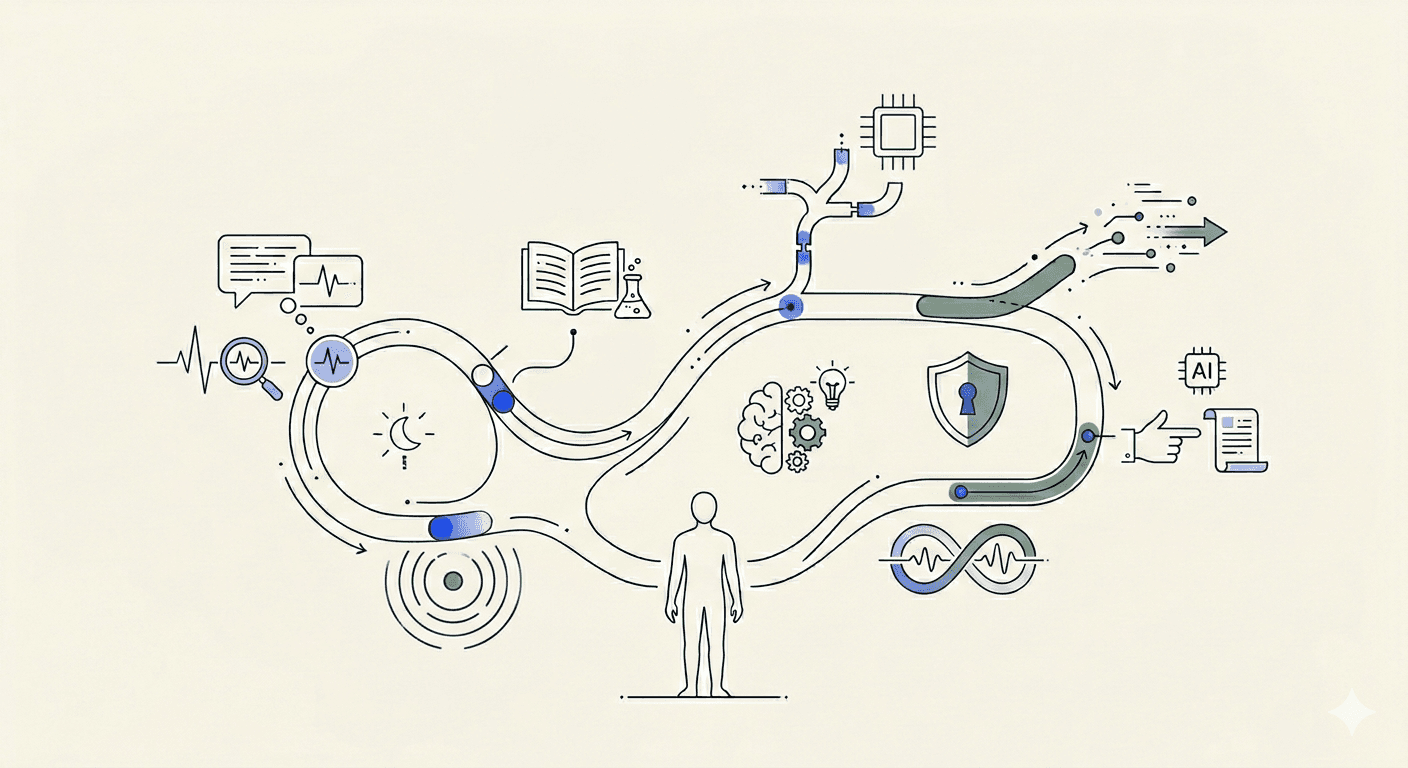
The wellness app market is moving into a more mature stage. By 2026, growth is no longer driven by feature overload or generic personalization. Most users have already tried multiple wellness and fitness apps and now expect products to be clear, reliable, and respectful of their time and data. Successful apps today are built around a few practical principles: trust in how data is handled, wellness guidance grounded in evidence rather than trends, and systems that adapt gradually to user behavior instead of forcing rigid plans. For product managers, CTOs, and HealthTech marketers, this shift raises concrete questions: Which wellness trends are worth long-term investment? How can innovation be introduced without increasing privacy or compliance risks? What do users actually expect from modern health and fitness apps? This article outlines the top 10 wellness app trends in 2026, focusing on how they are applied in real products. The goal is to help teams understand where wellness technology is heading and how to make informed product decisions—whether you’re building from scratch or evolving an existing app.
1. Context-Aware Personalization (Beyond Static Profiles)
Personalization in wellness apps has existed for years, but in 2026 it no longer depends on onboarding questionnaires or fixed user personas. Those approaches assume that goals and motivation stay constant, which rarely reflects real behavior.
Modern wellness apps personalize through ongoing context rather than one-time inputs. Instead of asking users to define objectives upfront and then enforcing them, products adapt gradually based on how users interact with the app and how their routines evolve.
Key contextual signals include:
Time of day and frequency of use
Short-term activity changes and extended inactivity
Sleep quality and recovery patterns over time
Stress-related indicators and behavioral signals
Engagement depth, not just completion rates
For example, a mindfulness app may reduce reminders during periods of low engagement or irregular sleep, while a fitness app might temporarily shift from performance messaging to recovery-focused guidance when sustained fatigue is detected.
Why it matters
Users respond better to products that acknowledge fluctuation. When an app adjusts to their current state instead of pushing preset plans, it feels supportive rather than demanding. This leads to more consistent engagement and fewer drop-offs caused by unrealistic expectations.
From a product perspective, context-aware personalization improves retention without relying on aggressive nudging or excessive features. It reflects a broader direction in wellness trends 2026, where adaptability, restraint, and long-term usability take priority over intensity or constant optimization.
2. Evidence-Based Wellness Content as a Product Requirement
Wellness users are more informed—and more skeptical—than ever. By 2026, recommendations that appear without explanation are often ignored or questioned. Apps that cannot clearly communicate why a suggestion exists struggle to build long-term credibility.
As a result, evidence-based content is no longer a differentiator. It has become a baseline expectation.
What’s changing
Leading health app trends now reflect a more structured approach to wellness content:
Clear references to clinical or behavioral research
Content reviewed or authored by domain experts
Transparent communication of limitations and uncertainty
A clear distinction between coaching, education, and medical guidance
For example, instead of simply suggesting breathing exercises, apps explain how a specific technique influences the nervous system, what outcomes it supports, and in which situations it may not be appropriate.
Why it matters
Users, regulators, and potential partners increasingly expect wellness products to demonstrate responsibility and clarity. Evidence-based design reduces reputational risk, supports compliance readiness, and strengthens trust with users who are cautious about health-related claims.
For product teams, this shift changes how content is produced and maintained. Content strategy can no longer sit solely within marketing. It becomes a core product function—closely tied to UX, legal review, and long-term product credibility.
3. Mental Health as a Continuous Layer, Not a Separate Feature
Mental health is no longer treated as a standalone module within wellness apps. By 2026, it is increasingly embedded across the entire user journey rather than confined to a dedicated section.
Instead of isolating mental health tools, modern apps account for psychological signals when shaping everyday interactions and recommendations.
What’s changing
Rather than offering separate “mental health” areas, apps now integrate mental and emotional context into:
Fitness recommendations and training intensity
Nutrition guidance and habit formation
Sleep tracking and recovery feedback
Goal-setting systems and progress evaluation
For example, when engagement drops while stress indicators increase, an app may temporarily simplify goals, reduce task volume, or suggest restorative activities instead of pushing performance-based challenges.
Why it matters
This approach mirrors how people actually experience wellness. Physical and mental states influence each other continuously, not in isolation. Products that reflect this interdependence feel more supportive and realistic, rather than demanding constant optimization.
Among current health app trends, this integrated model has a direct impact on long-term retention. Users are more likely to stay with apps that adjust expectations during difficult periods instead of treating disengagement as failure.
4. Wearable Data Interpreted for Humans, Not Dashboards
Wearables generate more data every year, but raw metrics alone rarely lead to meaningful behavior change. By 2026, the focus in wellness apps has shifted from collecting more signals to helping users understand what those signals actually mean.
Instead of acting as data dashboards, modern apps translate wearable data into clear, relevant guidance.
What’s changing
Wellness products increasingly prioritize interpretation over volume:
Fewer metrics displayed at the same time
Clear explanations of short- and long-term trends
Emphasis on insights that support decisions, not constant monitoring
Reduced focus on daily perfection and isolated data points
Rather than presenting dozens of charts, apps summarize patterns in plain language. For example:
“Your sleep consistency improved this week, which may explain the drop in afternoon fatigue.”
Why it matters
Most users do not want to analyze data. They want help deciding what to do next. By reducing cognitive load, apps become easier to use and more relevant in everyday life.
From an engineering perspective, this shift encourages teams to invest in smarter data pipelines, interpretation layers, and UX logic rather than adding new sensors or metrics that increase complexity without improving outcomes.
5. Privacy-First Architecture as a Competitive Advantage
Privacy is no longer a legal checkbox. By 2026, it directly affects whether users adopt and keep using a wellness app, particularly in HealthTech products that handle sensitive behavioral and biometric data.
Instead of treating privacy as a compliance layer added at the end, leading apps now design around it from the start.
What’s changing
Modern wellness platforms increasingly follow privacy-first principles:
Data collection is minimized by default rather than expanded upfront
Users are given granular control over consent and data usage
Data processing is explained in clear, non-legal language
Identity data is separated from behavioral and wellness data
Some products go further by allowing users to opt out of long-term data storage while still receiving personalized guidance through on-device or short-term processing.
Why it matters
As regulations evolve and user awareness increases, trust becomes a practical differentiator, not a branding message. Privacy-first architecture reduces compliance friction across regions, simplifies partnerships, and lowers long-term operational risk.
Within wellness trends 2026, this shift connects ethical product design with business sustainability. Teams that invest early in privacy-conscious systems are better positioned to scale without frequent rebuilds or trust-related setbacks.
6. Modular Wellness Platforms Instead of Feature-Heavy Apps
Many early wellness apps attempted to cover every use case at once. While comprehensive in scope, this approach often resulted in complex onboarding, bloated interfaces, and high maintenance costs. By 2026, modular design has proven to be more sustainable.
Rather than shipping everything by default, wellness apps are increasingly built as platforms composed of optional modules.
What’s changing
Modern products structure functionality into distinct, activatable modules, such as:
Stress management and recovery
Sleep optimization and circadian support
Fitness coaching and movement guidance
Nutrition tracking and habit-building
Corporate or enterprise wellness integrations
Users and enterprise clients enable only the modules that are relevant to their needs, while the rest remain inactive.
Why it matters
Modular design improves clarity during onboarding by reducing cognitive load and helping users understand the app’s value faster. From an engineering standpoint, it lowers maintenance complexity and allows teams to iterate or replace individual components without disrupting the entire system.
This structure also supports multiple business models, including B2C, B2B, and B2B2C, without requiring separate products. For CTOs and product managers, modularity enables long-term scalability while avoiding frequent rebuilds as the product and market evolve.
7. AI Used for Guidance, Not Authority
AI is increasingly present in wellness apps, but by 2026 its role has shifted from providing definitive guidance to supporting human-led frameworks. Users respond better when AI enhances the experience without replacing professional judgment.
What’s changing
Modern wellness apps use AI in ways that are controlled and transparent:
Recommendations are adjusted within predefined, safe boundaries
Patterns and trends are highlighted without making medical diagnoses
The system defers to professional guidance when issues fall outside its scope
Suggestions are accompanied by clear indications of uncertainty or limitations
For example, an app may recommend modifying a workout routine based on recent activity patterns but clearly communicate that the recommendation is adaptive, not prescriptive.
Why it matters
This restrained approach builds trust. Users are more likely to engage with AI when it feels supportive rather than authoritative. From a product perspective, responsible AI adoption reduces liability and aligns with emerging regulatory expectations.
Among current health app trends, AI is no longer about automation at all costs—it is about augmenting human-centered design and improving decision-making for the user.
8. Behavioral Science Embedded Into UX Design
Wellness apps are increasingly grounded in behavioral science rather than relying on slogans or surface-level motivation. By 2026, user experience design focuses on supporting sustainable behavior change rather than pushing temporary bursts of effort.
What’s changing
Modern wellness apps integrate behavioral principles into core interactions:
Habit-formation models to guide long-term routines
Friction reduction strategies to make desired actions easier
Timing-based nudges that align with natural user patterns
Reward systems that encourage engagement without creating dependency
For example, instead of pressuring users to maintain daily streaks, apps now prioritize consistent engagement over intensity, allowing for natural fluctuations in motivation.
Why it matters
Behavior change is inherently challenging. Products that recognize this reality feel more realistic, supportive, and achievable, which improves long-term retention. Embedding behavioral science into UX design directly enhances engagement metrics, user satisfaction, and overall product effectiveness.
9. Enterprise-Ready Wellness Solutions for Teams and Platforms
ellness is no longer limited to individual consumers. By 2026, companies are integrating wellness solutions into broader ecosystems, creating opportunities for partnerships and enterprise deployments.
What’s changing
Modern wellness apps are designed with enterprise capabilities in mind:
APIs for seamless integration with other platforms
Admin dashboards providing anonymized insights for organizations
Compliance-ready reporting to meet regulatory requirements
Flexible deployment options for different business environments
These features enable partnerships with insurers, employers, healthcare providers, and hardware manufacturers, expanding the app’s reach beyond individual users.
Why it matters
Enterprise readiness unlocks new revenue streams but also demands higher standards for security, scalability, and governance. For startups and product teams, it influences early architecture and design decisions, ensuring the product can scale reliably as it moves into business-to-business contexts.
10. Long-Term Wellness Journeys Instead of Short-Term Challenges
Short-term challenges are still part of wellness apps, but by 2026 they no longer define the user experience. Instead, products focus on supporting sustainable, long-term wellness journeys that reflect real-life rhythms.
What’s changing
Modern wellness apps incorporate long-term perspectives into their design:
Seasonal adjustments to routines and goals
Awareness of life events and context changes
Progress tracked over weeks and months rather than day-to-day
Acceptance of natural fluctuations, rest periods, and pauses
Rather than pushing users toward constant improvement, apps now provide guidance that adapts to the user’s pace and circumstances.
Why it matters
Users are increasingly frustrated with burnout-driven wellness approaches. Products that recognize real-life variability feel more supportive, relatable, and human, which strengthens engagement and retention over time.
This shift reflects a broader trend in fitness & wellness tech, where long-term adaptability and sustainability are becoming the defining principles for successful products.
What These Wellness Trends Mean for Product Teams
Across these trends, a clear pattern is emerging in wellness app design:
Apps are becoming more supportive and less intrusive
Personalization is thoughtful, responsive, and grounded in context
Technology guides users instead of competing for their attention
For product managers, CTOs, and HealthTech teams, the challenge is no longer adding more features—it’s about selecting the right ones and building systems that evolve responsibly over time.
At CipherCross, this philosophy guides the design of every wellness product. From user experience to secure, scalable architecture, the focus is on creating journeys that adapt to each user while respecting their needs and boundaries.
Stay ahead in wellness tech: subscribe to get the latest trends and insights delivered directly to your inbox.
Final Thoughts
The most effective wellness apps in 2026 will not focus on promising dramatic transformation. Instead, they provide structure, clarity, and flexibility—meeting users where they are and evolving alongside them.
By aligning product strategy with these wellness trends 2026, teams can create solutions that are both competitive and genuinely useful, delivering experiences that users trust and return to over the long term.
Stay ahead in wellness and HealthTech: subscribe for trend updates and receive expert insights on designing responsible, user-centric wellness products.
Dive into our diverse articles – from wellness app design and AI personalization to software development best practices, operational workflows, and strategic guidance.



Load More