
The Future of Digital Wellness — Blending Technology and Human Care

Mykyta Shevchenko
CEO & Co-founder

Digital wellness has entered a new stage. The early years of app-based health were about access—simple tools that tracked, reminded, and encouraged. Now, the conversation has shifted toward depth. The future is not about building more tools; it’s about creating a balance between what technology can calculate and what only humans can understand. At its core, wellness is still a human story. No algorithm can replace trust, motivation, or empathy. However, when designed with care, technology can amplify those qualities instead of replacing them. The next decade will belong to products that make this connection feel natural—intelligent enough to guide, gentle enough to support.
1. Why Human Connection Still Matters in Digital Wellness
Technology has always promised efficiency. However, health is not a process that works better simply because it’s faster. It’s emotional, behavioral, and deeply personal. Apps that track sleep, stress, or mood don’t just collect data; they interpret human moments. This is where many digital wellness tools fail. They optimize for engagement, not understanding. People stop using them when the app feels cold or generic. Real wellness support depends on connection—the feeling that someone, even through a screen, understands what you’re going through.
Human-centered wellness design respects this truth. It acknowledges that a meditation app is not about minutes logged but about calm achieved. A fitness tracker isn’t about steps; it’s about confidence. Technology should help users feel capable, not measured. The next generation of wellness apps will not aim to replace coaches or therapists. Instead, they’ll extend their reach. By blending personal data with empathetic design, digital tools can provide meaningful guidance while staying emotionally intelligent.
2. The New Role of AI in Wellness Care
Artificial intelligence now touches every corner of wellness—from habit tracking to personalized nutrition. However, its best use is not in prediction alone; it lies in pattern recognition that serves empathy. Modern AI systems can read trends across millions of data points. They can spot early signs of burnout, irregular sleep, or loss of motivation before the user even notices. However, that insight only matters when delivered with care.
AI should act as a quiet partner. It observes, learns, and then supports through context-aware nudges. A good example is an app that recognizes when a user’s tone in journaling changes and suggests a calming activity. It doesn’t diagnose or judge—it listens. What’s emerging now is “empathetic AI.” These systems are trained not only to analyze behavior but also to respond with language and pacing that feels human. They adapt tone, reduce friction, and learn when not to intervene. In wellness, that restraint matters as much as intelligence. The next phase of AI wellness won’t be defined by how much it knows, but by how respectfully it interacts.
3. Designing for Hybrid Wellness — Humans and Machines Together
The strongest wellness experiences combine human insight with digital precision. In therapy platforms, for example, AI tools handle scheduling, journaling, and tracking progress, while human professionals focus on empathy, guidance, and care. This hybrid structure reflects how most people actually want help. They don’t want full automation; they want support that fits their rhythm. A wellness app should feel like an assistant, not a supervisor.
Design teams working in this space now face a new challenge: how to make hybrid systems feel coherent. The transition between digital and human interactions should feel invisible. When a user moves from chatbot support to live coaching, tone and context must align. The user shouldn’t feel like they’re restarting the conversation. UX teams are starting to borrow ideas from service design—mapping every interaction so that digital and human touchpoints feel like part of one journey. This coordination requires careful use of data, strong consent systems, and real empathy for the user’s state of mind. When hybrid wellness experiences work, users report higher satisfaction, stronger commitment, and longer retention. It’s not the technology itself that makes them stay—it’s the sense that care is consistent across every touchpoint.
4. The Ethical Core—Privacy, Consent, and Transparency
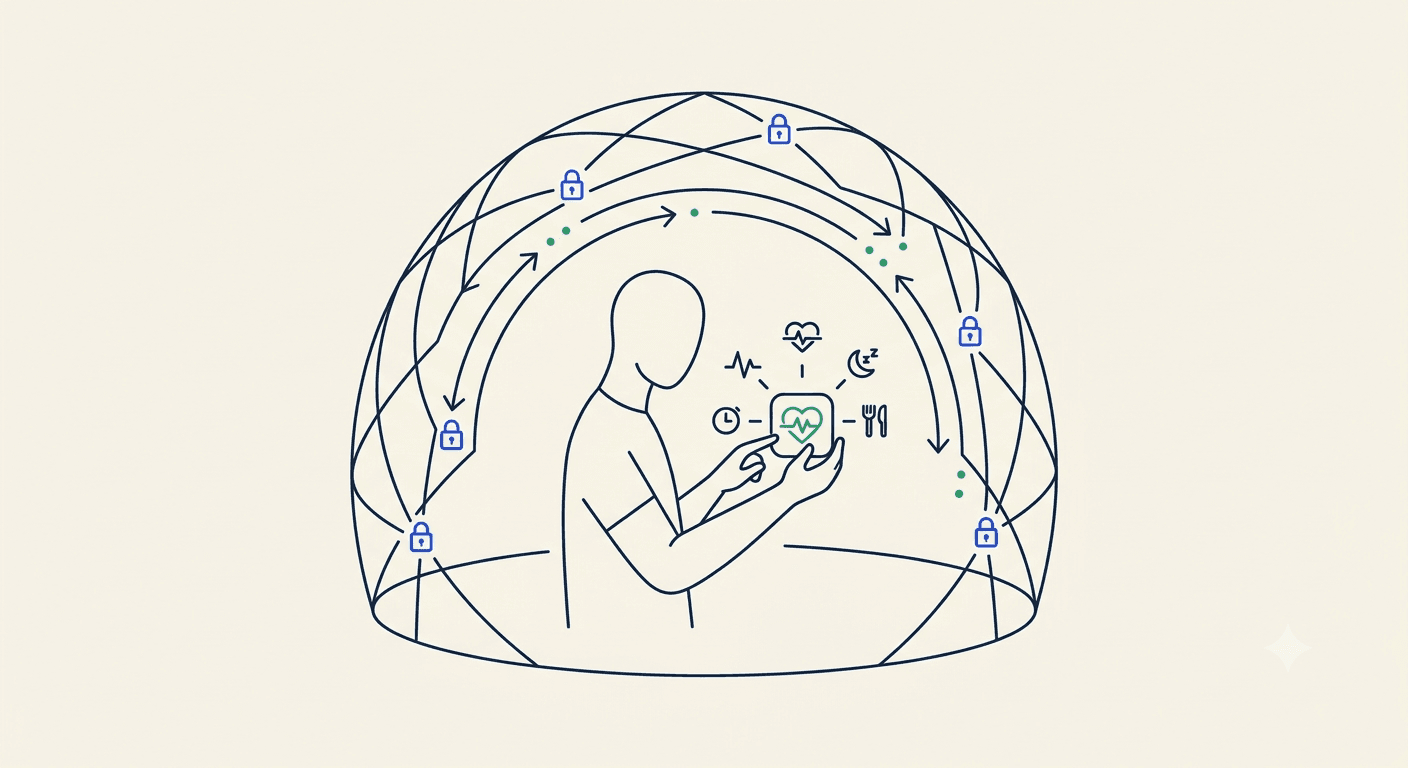
Every discussion about wellness technology leads to ethics. Data drives personalization, but personal data also carries risks. Health information is sensitive, intimate, and often misunderstood by those collecting it. Transparency is no longer optional. Users want to know how their data is used and who can see it. The best-designed apps don’t hide their logic; they explain it in language anyone can understand. Instead of saying, “We collect data to improve your experience,” they say, “We analyze your sleep patterns to suggest better rest habits.” That kind of honesty builds loyalty. It turns privacy from a compliance issue into a trust feature. Consent design is also evolving. Static forms and legal checkboxes don’t work anymore. Users should be able to manage what they share over time. If someone starts with full data sharing but later feels uncomfortable, they should be able to scale it back without penalty.
In wellness, ethical AI means making choices transparent and reversible. When people feel in control of their information, they engage more deeply. This is the ethical foundation of modern digital wellness — transparency, choice, and clarity.
5. Empathy in UX — The Invisible Design Layer
Many individuals assume that empathy in design is primarily demonstrated through the use of kind language or gentle imagery. However, in practice, empathy is fundamentally structural. It influences the functionality of features, the manner in which feedback is provided, and the way stress is managed. For instance, many health applications issue reminders that may be perceived as judgmental, such as “You missed your goal” or “You haven’t logged in for three days.” While these statements may be factually accurate, they can undermine motivation. Empathetic design seeks to reframe such messages to something more supportive, such as, “It seems your week has been quite busy. Are you ready to resume?” Although the underlying message remains unchanged, the tone transitions from one of blame to one of encouragement. Additionally, the visual rhythm plays a crucial role; calm colors, gradual transitions, and minimal visual distraction convey a sense of emotional safety. When users feel at ease, they are more inclined to place their trust in the application. Furthermore, empathy entails shielding users from being overwhelmed.
A well-designed wellness platform is aware of when to take a step back, recognizing instances of user overload to reduce the frequency of alerts.
6. From Engagement to Retention—What Makes Users Stay
Engagement metrics in wellness applications can often be misleading. A high frequency of daily usage does not necessarily equate to actual success. True success is defined by users returning after periods of absence, placing their trust in the process, and seamlessly incorporating the tool into their daily routines.
Retention is fostered through emotional comfort; when users perceive a sense of safety and understanding, their return becomes more organic. Data substantiates this, indicating that platforms prioritizing transparency, tailored guidance, and a gentle communicative approach tend to experience higher levels of sustained engagement over time.
Design teams can cultivate this environment by concentrating on small, meaningful rituals. Consistent greetings, subtly evolving progress visuals, and reflections that highlight users’ growth all foster a sense of belonging. Community features can also contribute positively, provided they are managed with care. Individuals are more likely to share personal insights when they feel acknowledged rather than exposed. Digital wellness platforms that harmoniously balance private reflection with optional social interaction empower users and enhance their experience.
In the realm of wellness, retention should not be regarded merely as a strategy for growth; it is fundamentally a relationship.
7. The Future — Beyond Personalization Toward Partnership
The forthcoming advancement in digital wellness transcends mere enhancement of data intelligence; it emphasizes collaboration. Rather than relying on applications that dictate user behavior, we will witness the emergence of systems that evolve through cooperative engagement. Future wellness technology is poised to function less as a mere instrument and more as a supportive coach that prioritizes comprehension. It will acquire knowledge through meaningful interaction rather than mere data extraction. This approach will facilitate contextual personalization, adjusting not only to quantitative metrics but also to individual life circumstances. For instance, it may identify indicators of workplace stress, travel habits, or familial dynamics and modify suggestions accordingly.
Artificial intelligence systems are progressing towards what experts refer to as "intent-based adaptation." This approach enables applications to discern the motivations behind user behaviors rather than simply tracking actions. When executed ethically, this methodology can create a sense of personalized guidance without becoming intrusive. Human connection will continue to hold a pivotal role in this paradigm. While digital coaches may enhance their listening abilities, individuals will invariably seek empathetic experiences that resonate authentically. In that balance lies the true promise of the future: technology that doesn’t replace care but scales it.
8. Closing Reflection
Digital wellness is evolving, as the initial excitement surrounding tracking and metrics diminishes. What persists is the fundamental human desire for care that is perceived as both intelligent and compassionate. When technology harmonizes with empathy, trust becomes a pivotal characteristic. Users do not need to comprehend every algorithm; their primary concern is to feel secure regarding the results.
The trajectory of digital wellness will not be determined by the creation of the most advanced artificial intelligence, but rather by the development of systems that prioritize respect. Developers need to regard users as collaborators rather than mere data points. At CipherCross, we assist wellness innovators in crafting such experiences that are centered on human needs, mindful of data, and rooted in trust.
Collaborate with CipherCross to pioneer the future of wellness technology.
Dive into our diverse articles – from wellness app design and AI personalization to software development best practices, operational workflows, and strategic guidance.





Load More