
How a Wellness App Increased Daily Activity by 55% with Micro-Habit Systems

Mykyta Shevchenko
CEO & Co-founder
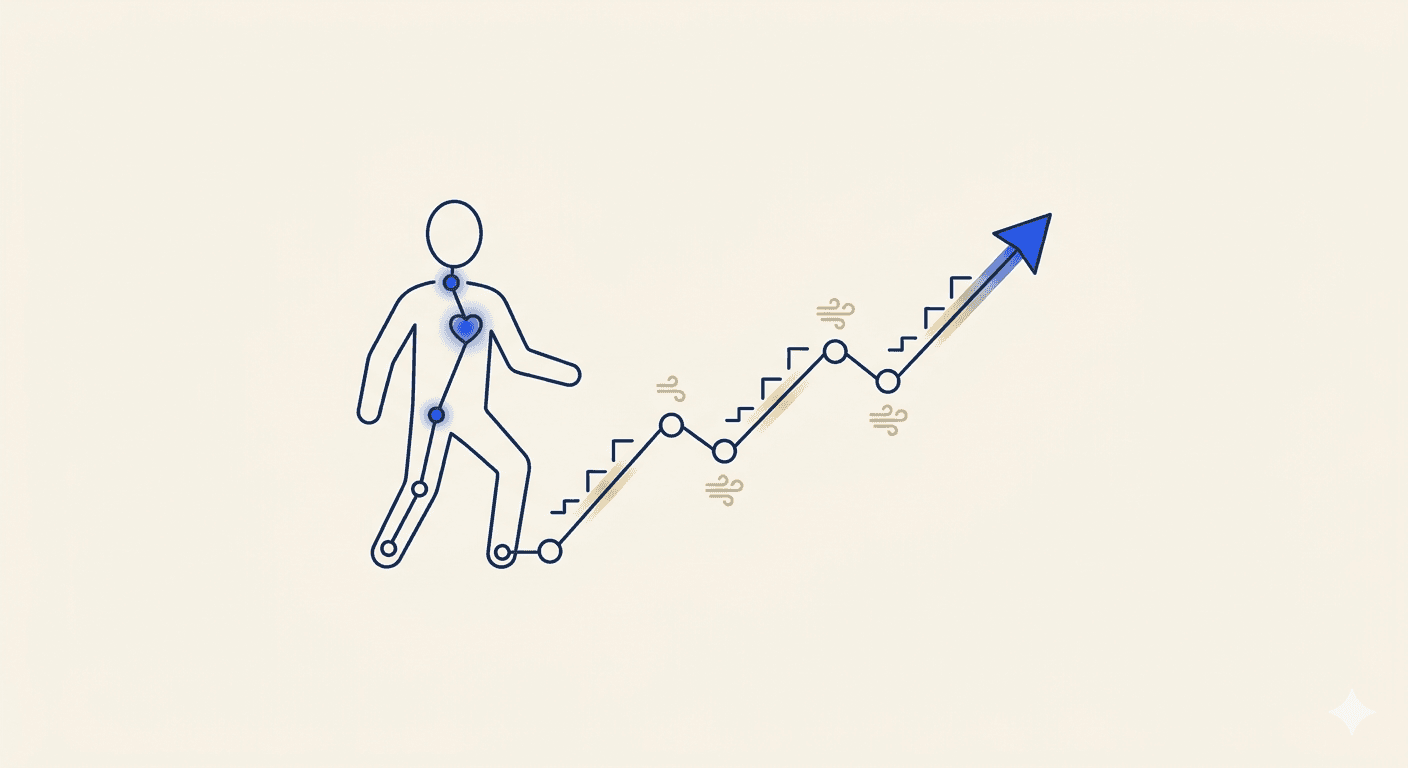
Daily activity is the hardest metric to move in wellness products—and the most honest one. It serves as the ultimate truth-teller in an industry often clouded by vanity metrics and surface-level engagement indicators. You can inflate downloads with marketing campaigns and strategic paid acquisition. You can boost session length with engaging content and immersive experiences. You can even improve short-term retention with aggressive reminders and carefully timed push notifications. But daily activity—users showing up consistently, doing something meaningful day after day—resists shortcuts and artificial inflation. It represents genuine user value and sustainable product-market fit.
This comprehensive case study examines how an anonymized wellness app successfully reversed stagnant engagement patterns and achieved a remarkable 55% increase in daily activity over a focused 12-week period by completely rebuilding its core engagement model around micro-habit systems. The transformation demonstrates the power of behavioral science when applied thoughtfully to product design.
No viral loops or complex referral mechanisms. No extensive gamification overhaul that risks trivializing the core experience. No behavior-shaming notifications that create guilt rather than motivation.
Instead, the product team focused on implementing evidence-based approaches: carefully designed small actions that feel achievable, contextual triggers that align with users' daily routines, progressive scaling that builds confidence over time, and habit-forming UX patterns deeply grounded in behavioral science principles. This detailed article systematically breaks down the initial engagement challenge, the strategic product decisions that shaped the micro-habit framework, what approaches proved successful, which initiatives failed to deliver results, and what practical insights other wellness teams can realistically apply to their own products.
The Initial Problem — When Motivation Decays Faster Than Features
Product Context (Anonymized but Realistic)
The app occupied a familiar and increasingly competitive category: daily wellness support that combined light movement exercises, guided breathing sessions, structured reflection prompts, and short mental reset activities. While it wasn't positioned as a clinical or therapeutic product, it regularly handled emotionally sensitive moments in users' lives—acute stress, physical and mental fatigue, fluctuating motivation levels, and breakdowns in daily routines.
The core user base predominantly skewed toward working adults managing irregular schedules and unpredictable demands. Initial adoption metrics were solid, showing strong product-market fit. Early retention numbers were acceptable by industry standards. But daily activity plateaued despite continuous product improvements and feature additions.
The Core Metrics That Triggered Intervention
Three clear signals emerged that indicated something structural was fundamentally broken in the engagement model:
Low DAU/MAU ratio
While monthly retention metrics appeared reasonable on the surface, deeper analysis revealed users were active only 2–3 days per week on average, far below the product's intended daily use case.Sharp drop-offs after day 7
New users typically engaged enthusiastically during their first week, showing strong initial commitment, but activity levels fell off sharply after this honeymoon period—even among users who consistently expressed positive sentiment about the product.Motivation decay, not feature dissatisfaction
Extensive qualitative feedback didn't point to missing features or product gaps. Instead, users consistently shared variations of:"I like it, I just forget to use it regularly."
"Some days it feels like too much of a commitment."
"I want to do something, but not necessarily a full session."
This wasn't fundamentally a content quality problem or feature gap. It was a behavior change design problem at its core.
Why Traditional Fixes Failed
Before committing significant resources to developing a micro-habit system, the team methodically tested conventional engagement levers:
More notifications → produced short-term activity lift, then led to faster user burnout
Streaks and badges → increased user anxiety about performance, rather than building consistency
Longer onboarding education → resulted in higher cognitive load and worse early drop-off rates
More personalization upfront → created confusion rather than clarity for new users
Each attempted solution treated the symptom (low daily activity) instead of addressing the root cause: the effort threshold was fundamentally misaligned with users' real-life constraints and capabilities.
Reframing the Goal — From "Daily Use" to "Daily Doability"
The Strategic Shift
The pivotal breakthrough in engagement strategy emerged not from pursuing the conventional question of "How do we incentivize users to increase their activity?" but rather from a fundamental reframing that put user capability at the center:
"What is the smallest, most achievable action that a user could realistically accomplish even on their most challenging day—and still feel a genuine sense of progress?"
This paradigm shift in thinking led to the development and implementation of a comprehensive micro-habit system that would revolutionize user engagement patterns.
What the Team Meant by "Micro-Habit Systems"
The concept went far beyond simply breaking tasks into smaller components. These were carefully designed actions engineered according to five essential criteria that emerged from extensive behavioral research and user testing:
Low friction — Each action was deliberately constrained to 60 seconds or less, making it cognitively and temporally accessible even during high-stress periods. This strict time boundary removed the common "I don't have time" barrier.
Contextual — Actions were dynamically matched to the user's current state, time of day, energy level, and recent activity patterns, ensuring relevance and appropriateness for their immediate situation.
Self-contained — Every micro-habit was designed to be completely independent, requiring zero preparation, no additional equipment or setup, and most importantly, no forward commitment that might create anxiety about future obligations.
Emotionally neutral — Actions were carefully crafted to avoid triggering performance anxiety or guilt. The focus was on presence rather than achievement, removing the psychological weight often associated with wellness activities.
Expandable — While each action was complete in itself, it was designed with natural expansion pathways that users could optionally explore when they felt ready, creating organic growth opportunities without pressure.
This wasn't about offering simplified versions of the main product features. Rather, these micro-habits represented the core essence of the product itself—particularly crucial for supporting users during low-energy or high-stress periods.
Defining the North Star Metric
The team moved away from traditional engagement metrics like session completion rates or streak maintenance, instead establishing a new foundational metric that aligned with their revised understanding of meaningful engagement:
Daily Meaningful Action (DMA): This metric tracked any intentional user interaction that met three specific criteria:
Required active engagement (distinguishing it from passive behaviors like content scrolling)
Delivered immediate wellbeing value in the present moment
Could be completed within a 90-second window
The team identified and implemented several concrete examples of DMAs:
A single guided breath exercise with focused attention
One deliberate posture adjustment with awareness
Responding thoughtfully to a single reflection prompt
Completing one mindful movement sequence
Performing a brief awareness check-in
This redefinition transformed how daily activity was conceptualized and measured. Success was no longer about completing predetermined programs or maintaining perfect streaks—it was about showing up meaningfully, even if briefly, each day.
Building the Micro-Habit Framework — Product Decisions That Moved the Needle
1. UX Flow Redesign: One Entry Point, Not Many Choices
Before: Users faced a potentially overwhelming array of 8–12 options on the home screen, requiring them to make decisions about their wellness approach before they could take action.
After: The interface was streamlined to feature one prominent, clear call-to-action:
"Start a 30–60 second reset."
This simple entry point was powered by a sophisticated micro-habit engine that intelligently selected appropriate actions based on multiple contextual factors:
Current time of day
User's most recent completed action
Pattern of activity frequency
User's self-reported energy level (when provided)
This approach eliminated the need for users to make decisions about what to do—they simply needed to decide to begin.
Why it mattered: Analysis showed that choice paralysis significantly impeded daily activity. By reducing the cognitive load of decision-making, the team saw marked improvements in user follow-through.
2. Contextual Triggers Instead of Scheduled Reminders
The system evolved beyond static daily reminders to implement contextual nudges that aligned with users' natural daily rhythms.
Key trigger points included:
Initial app launch each day
Periods of midday inactivity
Late-afternoon energy dips
Evening relaxation windows
Each trigger was paired with a micro-habit calibrated to likely energy levels rather than generic prompts.
For example:
Midday periods triggered quick posture adjustments
Late afternoon slots suggested calming breath work
Evening times offered reflective prompts
Why it mattered: The system's fundamental shift from motivation-based prompting to meeting users in their current state represented a crucial paradigm change in wellness technology design. By acknowledging and adapting to users' existing energy levels, emotional states, and daily rhythms, rather than attempting to artificially generate motivation, the platform created a more sustainable and empathetic engagement model. This approach recognized that wellness journeys aren't linear and that forcing motivation often leads to resistance and disengagement.
3. Reward Logic: Progress Without Pressure
The team made a bold departure from conventional habit-forming UX by completely eliminating visible streaks, which often create anxiety and perfectionism. This decision was rooted in extensive user research showing that streak-based systems, while initially engaging, frequently led to long-term abandonment.
Instead, they introduced a more nuanced and psychologically informed reward system:
Consistency signals that highlighted patterns without judgment ("You've shown up 4 times this week.") These neutral observations acknowledged effort without creating pressure for specific frequencies.
Capacity-based praise that validated users' self-awareness ("You chose a reset on a busy day.") This reinforced the importance of adapting practice to current circumstances.
Invisible accumulation where micro-actions quietly contributed to larger milestones without explicit tracking. This subtle approach prevented the common "all-or-nothing" mindset that often derails habit formation.
The system deliberately avoided:
Red warnings that could trigger shame or anxiety
Broken streak notifications that might discourage re-engagement
Any messaging suggesting optimal or target frequencies
This careful curation of feedback created a pressure-free environment where users could maintain their practice without fear of "falling behind" or "failing."
Why it mattered: The removal of performance pressure had a transformative effect on user behavior. Data showed that users became significantly more willing to engage on low-capacity days, knowing their smaller actions were valued and that imperfect engagement was normalized. This led to more consistent, sustainable patterns of use rather than cycles of intense activity followed by abandonment.
4. Habit Stacking Without Explicit Instruction
Rather than overtly teaching habit formation theory, the system implemented an organic habit-stacking framework that naturally guided users toward deeper engagement. This implicit approach respected user autonomy while facilitating natural progression.
Examples of the subtle stacking implementation:
After completing a breath exercise → an optional gentle stretch sequence would become available
After finishing a reflection → an optional grounding cue would appear
After completing three micro-habits within a week → a suggestion for a 3-minute flow sequence would be offered
The system maintained several crucial principles:
Every next step was presented as entirely optional, with no pressure to continue
No messaging implied that longer or more complex activities were superior
The default path remained consistently brief and accessible
Progression suggestions were based on demonstrated patterns rather than predetermined schedules
Why it mattered: This approach resulted in organic increases in user engagement without creating the sensation of being pushed or manipulated. Users naturally discovered and explored additional practices at their own pace, leading to more sustainable behavior change and deeper platform integration into their daily routines.
The success of this method was particularly evident in retention metrics, showing that users who discovered new practices through this organic stacking approach were significantly more likely to maintain their engagement compared to those who were explicitly directed toward more intensive practices.
Micro-habits must be designed to feel supportive and empowering, rather than predictive or prescriptive of user behavior. This fundamental principle guides how wellness technology can create sustainable engagement without inducing pressure or anxiety.
2. Gamified Counters for Micro-Actions
A controlled test introduced visible numerical tracking mechanisms that displayed quantitative feedback to users ("You've done 18 micro-habits this month"). This experiment aimed to understand the impact of explicit measurement on user engagement and behavioral patterns.
Results revealed significant behavioral impacts:
A subset of users showed marked disengagement after missing consecutive days, indicating that visible metrics created performance anxiety
Another segment began optimizing their behavior solely to increase their numerical counts, potentially compromising the quality and intentionality of their wellness practice
The quantification of habits led to decreased authenticity in how users approached their wellness journey
Implementation of solution:
Complete removal of visible numerical counters from the user interface
Strategic shift to narrative-based feedback mechanisms that emphasized quality over quantity
Introduction of weekly summary formats that provided context without triggering perfectionism
Integration of qualitative progress indicators that celebrated consistency without numerical pressure
Key lesson learned:
The visibility of measurement metrics can fundamentally undermine the authentic intention behind micro-habit formation, leading to counterproductive behavioral patterns and reduced long-term engagement.
3. Scaling Too Fast
Initial platform design offered accelerated progression to longer session durations, which inadvertently resulted in decreased daily engagement frequency for a significant user segment.
Comprehensive solution implementation:
Careful recalibration of progression thresholds to better align with natural behavior change patterns
Enhanced focus on user-initiated progression rather than system-driven advancement
Implementation of more granular progression steps to ensure sustainable habit formation
Development of adaptive algorithms that better recognized individual user readiness for advancement
Critical lesson:
Behavioral capacity develops at varying rates across different users and circumstances. The most effective approach is to empower users to pull themselves toward more advanced practices rather than pushing them through predetermined progression paths.
This insight led to several key platform adjustments:
Introduction of more flexible progression options
Development of better user readiness detection mechanisms
Creation of more nuanced advancement pathways
Implementation of reversible progression options that allowed users to adjust their practice intensity based on current capacity
The revised approach demonstrated that sustainable habit formation requires careful attention to individual user rhythms and readiness, rather than standardized progression timelines. This user-led scaling methodology resulted in significantly improved retention rates and more consistent long-term engagement patterns.
The data clearly showed that when users were given agency over their progression, they made more sustainable choices that led to better long-term outcomes. This reinforced the fundamental principle that effective wellness technology must prioritize user autonomy and natural behavior change patterns over predetermined advancement schedules.
Final Thoughts: Why Micro-Habit Systems Are a Strategic Advantage
The 55% increase in daily activity didn’t come from adding features. It came from rethinking behavior change design.
Micro-habit systems:
reduce friction
align with real life
scale organically
support ethical engagement
improve long-term retention
For wellness apps, they offer a path to growth that doesn’t depend on pressure, guilt, or overuse—only on thoughtful product strategy and respect for human behavior.
Design habit-forming wellness products with CipherCross — science-backed, ethical, scalable.
Dive into our diverse articles – from wellness app design and AI personalization to software development best practices, operational workflows, and strategic guidance.





Load More