
AI in Wellness — Smarter Personalization, Safer Experiences

Volodymyr Irzhytskyi
COO & Co-founder
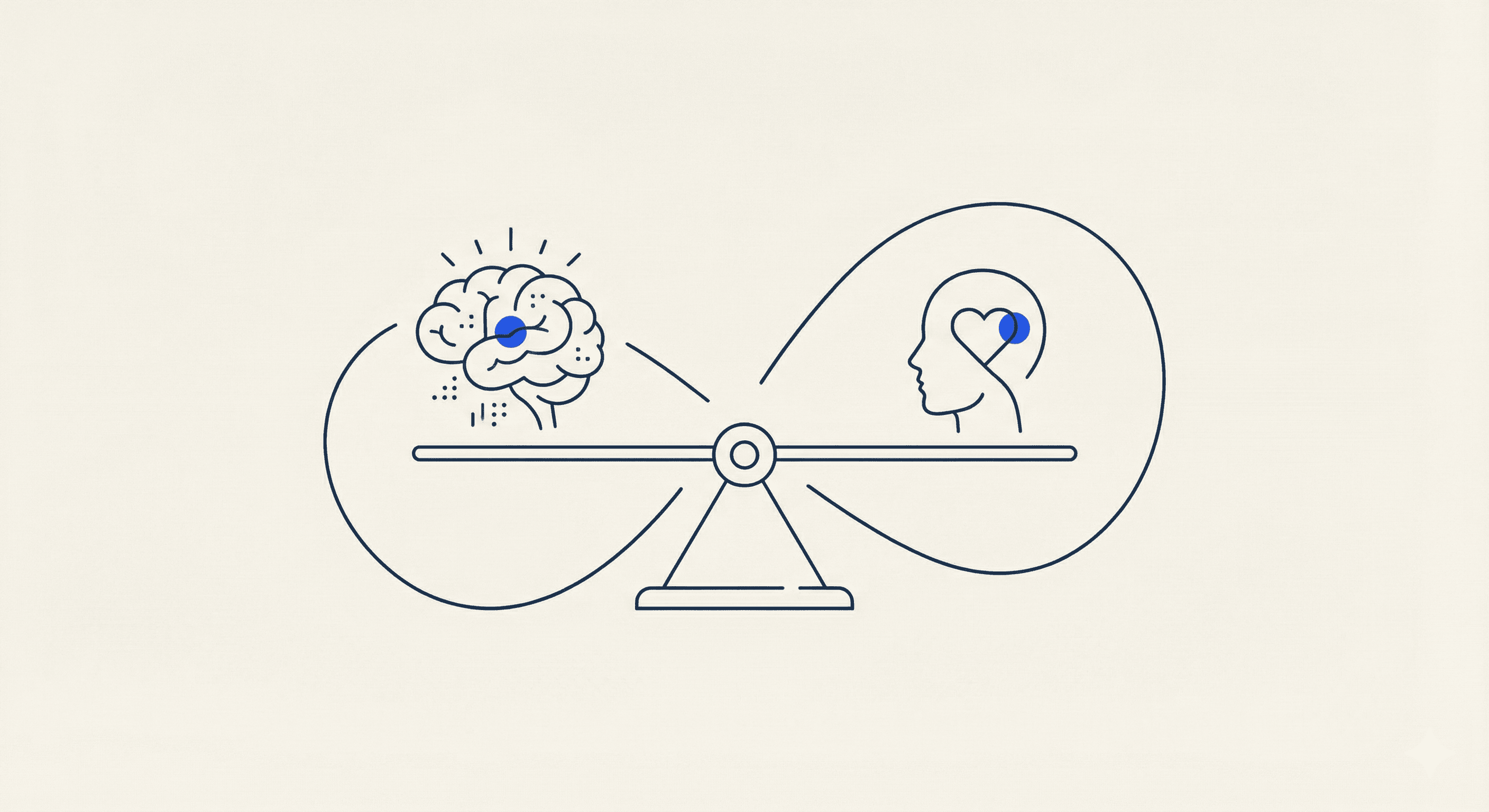
AI has become an integral component of many wellness apps, extending beyond mere marketing claims. It can aggregate data from wearables, sleep trackers, mood logs, and usage patterns to provide meaningful, personalized guidance that users can depend on daily. However, the same capabilities that make AI valuable also introduce risks if systems are developed without clear ethical guidelines. When an algorithm influences a person’s stress levels, sleep habits, or mental health, the design decisions behind that algorithm are as important as the code itself. This article outlines how teams can leverage AI to deliver smarter personalization while prioritizing privacy, transparency, and human judgment in every decision. It is intended for product leaders, data scientists, and wellness innovators seeking practical methods to build AI systems that assist rather than intrude.
The Promise of Personalization
AI can detect patterns at a speed and scale beyond human capability. It can identify subtle shifts in behavior that indicate deeper needs. For example, an app that notices shorter sleep cycles and increased restlessness might suggest changes to an evening routine long before the user makes the connection. Similarly, an app that tracks consistently low energy and reduced activity can offer options tailored to the user’s day, rather than pushing preset workouts that feel unattainable. In these moments, AI enhances human care by providing thoughtful recommendations that align with real life. Personalization increases the relevance of small nudges and reduces the chance that suggestions are perceived as generic noise. This approach helps transform a one-time download into an ongoing relationship.
However, personalization also creates pressure. It tempts teams to collect more data under the promise of improving models. Every additional signal increases complexity, storage requirements, and risk. Excessive tracking can make a product feel intrusive, especially in the context of mental health or sensitive well-being topics. The fundamental question then becomes not what AI can predict, but what it should predict. The answer requires intention, not just technical skill. Product teams must clearly define user value before adding a new sensor or analytics feature.
Designing AI with Human Judgment
AI should serve as an amplifier of human insight, not a replacement for it. When models generate suggestions that influence mood, habits, or medical decisions, human oversight is essential. Effective design patterns include visible explanations for why a suggestion is made, easy ways for users to correct or opt out of recommendations, and explicit escalation paths to human coaches or clinicians when the risk is significant. These patterns foster a partnership in which AI offers options and people make informed choices with сlear context.
Another effective approach is conservative automation. Systems that begin with low-friction actions, such as optional nudges or gentle reminders, allow users to maintain control. If users accept assistance, the system can gradually offer more targeted support. This approach preserves user agency while enabling the model to improve its suggestions based on real, explicit interactions. As automation increases, transparency should also be enhanced. Users need clear, concise explanations for AI suggestions to accept them and remain engaged over time.
Build for uncertainty rather than conceal it. Models are not infallible, and they should communicate their confidence in ways that are understandable to people. A recommendation that expresses a modest level of certainty encourages curiosity and further testing. Conversely, a statement that feigns certainty when it lacks it quickly undermines trust. Thoughtful interfaces present uncertainty in clear, simple terms and provide straightforward next steps for users who wish to learn more or decline the suggestion.
Limit data collection to what matters
Purpose-driven data collection is an effective approach to maintaining trust. Teams should begin by clearly defining the problem they aim to solve and then identify the minimal data signals necessary to address it effectively. For example, if the goal is to support better sleep, tracking a combination of bedtime, wake time, and a few physiological markers may be sufficient. If the goal is to enhance mood awareness, brief mood check-ins and contextual notes can often reveal meaningful patterns without requiring exhaustive tracking.
The minimal approach reduces storage costs and future liabilities while keeping the model focused. It also facilitates user consent, as people can better understand and evaluate fewer, clearer requests for permission. Request permission only when the feature will immediately provide value. Avoid bundling all permissions into a single, dense agreement at signup. Contextual permission enhances comprehension and makes users more comfortable sharing the data that matters.
When collecting more sensitive signals, design for immediate benefit so users can clearly see the tradeoff. For example, if voice tone is sampled to detect acute stress, the app should offer a brief breathing exercise at that moment and allow the user to delete the recorded snippet if they choose. Providing immediate utility tied to sensitive data collection makes permissions feel mutual rather than one-sided.
On Device Models and Federated Learning
A valuable technical approach for safer personalization involves shifting more intelligence to the device. On-device models can analyze raw signals locally and share only derived, non-sensitive features with a central service when necessary. Federated learning enables models to improve globally without exposing raw user data. This approach minimizes the amount of personal information that leaves a user’s phone while still allowing shared learning across many users.
The benefits are practical. Users have fewer reasons to worry about servers retaining raw audio, complete activity logs, or unredacted text. Teams face fewer regulatory challenges when minimal personal data is stored centrally. From a product perspective, this tradeoff is manageable. Local models may initially be less flexible, but they build confidence and often result in better long-term engagement because users feel safer.
Explainability and Plain Language
Explainable AI is especially important in wellness products compared to many other domains. Users need to understand why a particular suggestion is made. They need to see the connection between the data signal and the recommendation expressed in clear, straightforward language. This is not about revealing complex technical formulas; rather, it involves translating model behavior into human terms that are easy to understand without jargon. A few concise sentences that link observations to suggested actions will build more trust than lengthy technical explanations.
Effective explainability also avoids moralizing. The goal is to foster understanding, not to assign blame. Statements that present changes with curiosity and clarity are most effective. For example, a simple note such as, sleep duration has decreased this week; you might consider an earlier bedtime, information without judgment. Explainability should be integrated into the user experience (UX) from the initial wireframe, rather than added as an afterthought.
Bias and Fairness in Wellness Models
Data rarely represent everyone equally. Models trained on a narrow subset of users often perform poorly and unfairly when applied to broader populations. Cultural differences, gender variations in symptom expression, and diverse lifestyle contexts can all alter the interpretation of a signal. Therefore, teams must test models across diverse cohorts and actively identify potential blind spots.
Audits and ongoing performance evaluations are essential. This involves tracking how the model performs across different subgroups and establishing clear processes for remediation when disparities arise. It also requires practicing humility in the rollout of features. Limited pilots with diverse participants help identify issues earlier than broad launches. When a model underperforms with a particular subgroup, pause, analyze, and adjust rather than exposing more users to a flawed experience.
Choices about personalization are ethical decisions. A fair model addresses errors with a cautious approach that prioritizes safety and human oversight. Bias in wellness tools can negatively impact well-being. The cost of neglecting fairness is significant, as it undermines trust more quickly than most technical errors.
Privacy by Design Across the Stack
Privacy must be integrated into every aspect, from architecture to messaging. This includes encrypting sensitive data both in transit and at rest, restricting access within the organization through strict role-based permissions, and enforcing clear retention policies that delete or anonymize data when it no longer benefits the user. Additionally, it involves creating straightforward methods for users to export and delete their data without any friction.
Legal frameworks such as GDPR and HIPAA provide essential guidelines, but they cannot replace empathy. Compliance ensures adherence to local regulations, while empathy fosters long-term engagement. Integrate privacy controls seamlessly into the user experience so that choices feel natural and accessible. Using plain language, a centralized privacy hub within the app, and one-tap controls are effective strategies that empower users to manage their information confidently.
Human-in-the-loop and escalation pathways
Wellness AI must incorporate robust human-in-the-loop mechanisms to ensure safety. When models detect potential risks, the system should provide clear pathways to human intervention. This may involve inviting the user to speak with a coach, recommending a consultation with a clinician, or escalating to emergency contacts in critical situations. The criteria for escalation should be conservative and validated in collaboration with clinicians.
Human review also enhances model quality. Feedback loops, in which clinicians annotate or correct model outputs, provide improved training data and help develop systems that remain clinically reliable. Human involvement in the loop is not a fallback; it is a fundamental component of a responsible product lifecycle.
Measuring meaningful outcomes instead of vanity metrics
Performance measurement matters. Too many teams optimize for sessions or clicks without assessing whether users actually feel better or remain safer. Develop metrics that prioritize health and well-being rather than product vanity. Longitudinal measures—such as sustained improvements in sleep quality, reduced stress reports over several months, or better adherence to clinically recommended routines—are far more valuable than daily active user counts.
A rigorous measurement approach includes A/B testing of interventions, cohort analysis, and long-term follow-up. It also involves gathering qualitative feedback through interviews, journaling, and clinician input. Combining these sources allows for a comprehensive evaluation of whether AI-driven personalization produces meaningful results for users.
Transparency Regarding Limitations and Potential Harms
No algorithm is perfect, and being candid about its limitations is a form of respect. When a model has only tentative evidence supporting a suggestion, clearly label it as such. If an insight is experimental or falls outside the current evidence base, request users' consent before involving them in pilot features. Design communications that avoid overpromising and enable users to select their preferred level of comfort with uncertainty.
Communicate potential risks honestly. If an automated suggestion could interfere with a medical regimen or contradict a clinician’s advice, clearly state this and provide links to human support resources. Users often appreciate straightforwardness when accompanied by practical alternatives.
Design Practices for Long-Term Trust
Trust is built through thousands of small, consistent interactions rather than a few significant actions. Maintain a predictable and respectful interface. Use gentle language and provide easy options to opt out of tracking. Avoid gamified elements that shame users or encourage unhealthy competition. Design for rest as much as for activity.
Create a privacy center that is both visible and user-friendly. Offer clear tools for data export and deletion. Provide concise explanations when requesting new permissions. Invest in a robust security posture that includes regular audits and public summaries of the findings. Consider independent third-party reviews or certifications for especially sensitive features.
The Future of Wellness AI
The near future will likely see hybrid models that combine on-device processing with federated updates and optional cloud-based aggregation for non-sensitive analysis. We will observe more systems that treat privacy as a primary constraint and measure success by both health outcomes and sustained user trust. New standards will emerge for evaluating wellness AI, with best practices encompassing not only technical metrics but also human-centered criteria.
As the field matures, companies that lead with empathy and restraint will distinguish themselves. They will create products that feel like companions rather than auditors. They will demonstrate that intelligent systems can be both helpful and humane.
Conclusion
AI has enormous potential to make wellness both personal and accessible at scale, but this can only be achieved if product teams design with care. Smarter personalization stems from clear intent, the minimal necessary data, and a strong commitment to privacy and fairness. Safer experiences result from human oversight, transparent communication, and measurable outcomes that truly matter to people. These elements are not optional extras; they form the fundamental architecture of trust.
Design ethical AI wellness systems with CipherCross. Book your session with us today.
Dive into our diverse articles – from wellness app design and AI personalization to software development best practices, operational workflows, and strategic guidance.






Load More