
Safe Personalization: How to Balance Tailored Wellness with Ethical Boundaries in 2026

Mykyta Shevchenko
CEO & Co-founder

In wellness and mental health tech, personalization promises the holy grail: the right intervention at the right moment, delivered in a tone that feels supportive, based on patterns that actually reflect a person's life. It's why users stick, why outcomes improve, why products feel "alive." But it's also where things can go wrong faster than in almost any other consumer category, creating potential risks that keep product teams awake at night and legal teams constantly vigilant. Because in wellness, the raw material for personalization is not "preferences." It's a sleep debt. Stress. Shame. Relationship volatility. Medication routines. Emotional triggers. Moments of loneliness at 2 a.m. The system isn't just learning what a user likes—it's learning where they're vulnerable. These deeply personal data points form the foundation of the user experience, making every algorithmic decision potentially consequential for the user's wellbeing. In 2026, that reality is shaping a new standard: safe personalization. Not "less personalization," not "personalization with a privacy policy," but a deliberate approach to building personalized wellness systems that respect human boundaries, comply with evolving regulation, and—most importantly—earn trust in the moments that matter. This emerging paradigm requires a fundamental shift in how we conceptualize, design, and implement personalization features in wellness technology. This article breaks down what safe personalization means in practice, why it's simultaneously the biggest opportunity and the biggest risk, and how product and UX teams can make ethical decisions without paralyzing innovation. Expect real product dilemmas, micro-scenarios, and concrete frameworks—not abstract theory. We'll explore actionable strategies that balance the promise of personalization with the imperative of user protection.
Why Personalization Is the Biggest Opportunity and the Biggest Risk
The Opportunity: A Wellness Product That Finally Feels Like It "Gets Me"
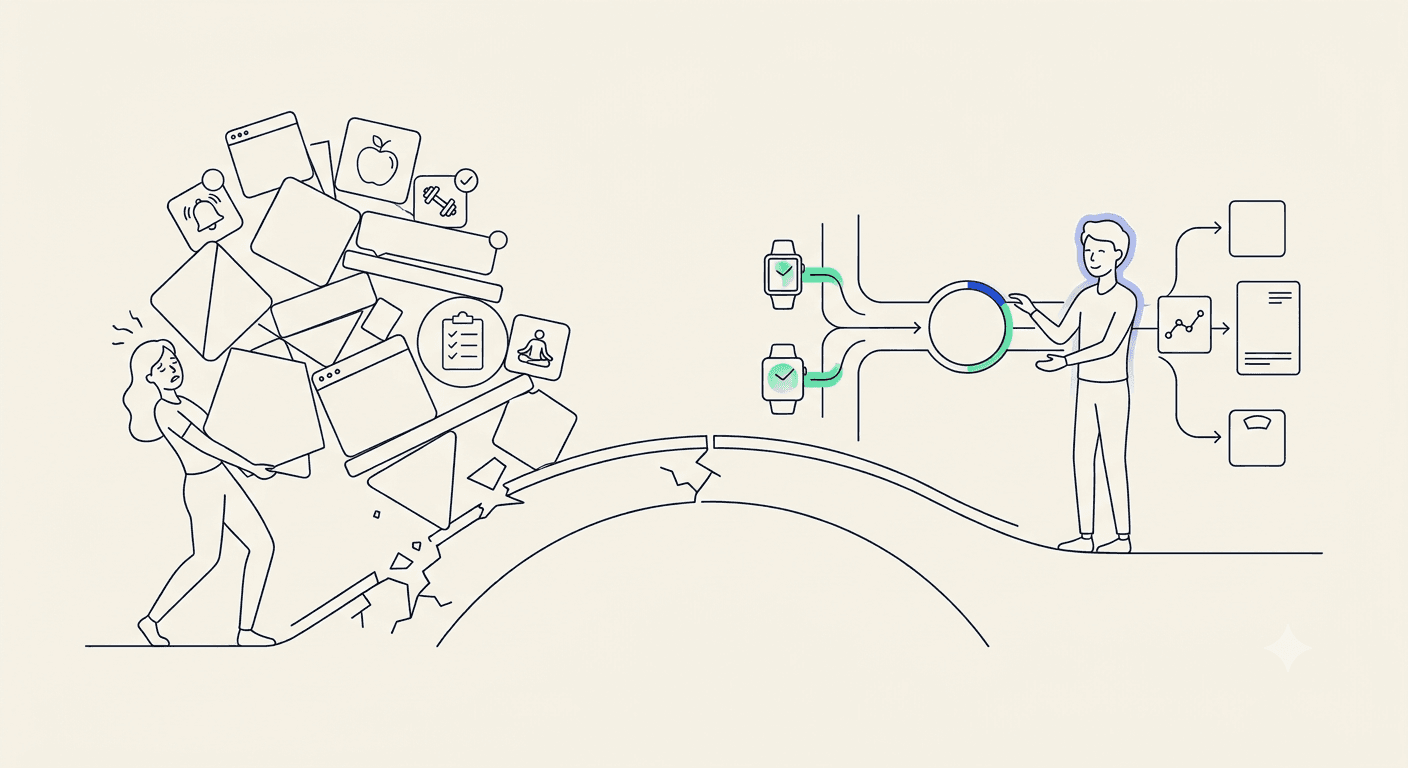
Wellness products have historically struggled with a basic mismatch: the user's life is variable, but the app experience is often static. This fundamental disconnect has limited the effectiveness of many digital health interventions, creating a gap between user needs and product capabilities.
A user wakes up well-rested one day and depleted the next. Their motivation swings. Their stress spikes. Their routines break because of travel, deadlines, conflict, hormonal changes, caregiving responsibilities, or just the messy randomness of being human. If your product can't adapt, it becomes a library—not a companion. This rigidity often leads to user abandonment and reduced therapeutic efficacy.
Done well, personalization can:
Reduce friction by simplifying choices when a user is overwhelmed, offering contextually appropriate options that match their current state
Improve outcomes by selecting interventions that fit a user's actual capacity, not just their aspirational goals
Increase engagement without coercion by aligning with intrinsic goals and personal values
Support behavior change through timing and relevance, not pressure, creating sustainable habit formation
Help users feel seen, which is often the precursor to sustained change and meaningful transformation
This is why teams are investing in privacy-first wellness tech architectures and responsible AI in health patterns: the upside is real, and the competitive edge is obvious. The potential to create truly adaptive, responsive wellness experiences drives innovation across the industry.
The Risk: Personalization Turns the Product Into a Psychological Actor
Once a product adapts to someone's emotions, vulnerabilities, and habits, it stops being neutral. It becomes a psychological presence. It can soothe, agitate, reward, guilt, nudge, and shape identity—sometimes unintentionally. This transformation from tool to active participant in a user's psychological landscape carries profound ethical implications and responsibilities.
Here are three risks that show up in real products:
Overreach: The product makes unauthorized and potentially harmful inferences about users' personal lives and mental states without explicit consent or clinical validation. For example, it might deduce relationship distress from communication patterns, flag disordered eating behaviors from meal logging data, or identify depressive cycles from activity levels and sleep data. These inferences, while potentially accurate, cross important ethical boundaries when users haven't explicitly agreed to this level of psychological profiling. The risk amplifies when these inferences drive automated interventions or influence how the product interacts with users during vulnerable moments.
Dependency: The product gradually becomes the user's primary mechanism for emotional regulation, creating an unhealthy reliance that undermines natural coping abilities. Users find themselves increasingly unable to navigate basic emotional experiences—falling asleep, managing anxiety, or making decisions—without consulting the app. This dependency can manifest as compulsive checking behaviors, decision paralysis without app validation, or anxiety when unable to access the product. The app shifts from being a supportive tool to an emotional crutch, potentially weakening the user's inherent resilience and self-trust.
Manipulation: The product leverages sophisticated engagement tactics that exploit users' emotional vulnerabilities rather than supporting genuine wellbeing. For instance, detecting anxiety might trigger urgent notifications suggesting immediate meditation sessions, framed with artificial urgency rather than authentic care. These tactics often employ psychological triggers, timing pressures, and emotional leverage points to drive engagement metrics, prioritizing product usage over user autonomy and authentic healing.
In the context of wellness applications, personalization carries unique weight and responsibility because it directly interfaces with users' mental and emotional states. This fundamental difference sets wellness personalization apart from more conventional recommendation systems. While a movie recommendation platform making an incorrect suggestion might lead to mild disappointment or wasted time, a wellness product's personalization missteps can significantly impact a user's psychological wellbeing, coping strategies, and emotional resilience.
Personalization Isn't a Feature. It's a Relationship Contract.
As we approach 2026, a crucial paradigm shift is emerging: viewing every personalized element as part of an implicit contract between the product and the user. This contract encompasses several critical dimensions that demand careful consideration:
What are we learning about you? This involves transparent documentation of all data collection, inference patterns, and learning mechanisms the product employs to understand user behavior and mental states.
What are we doing with that knowledge? Clear communication about how collected insights translate into personalized features, recommendations, and interventions.
What do we optimize for—your outcomes or our metrics? Explicit prioritization of genuine user wellbeing over engagement metrics and business objectives.
Can you understand, control, and reverse what's happening? Ensuring users maintain agency through comprehensible systems, meaningful controls, and the ability to modify or reverse personalization decisions.
When product teams approach personalization merely as a "smart UX" feature, they may achieve faster deployment and initial user engagement. However, this simplified view accumulates significant ethical debt over time, potentially compromising user trust and wellbeing. True safe personalization requires treating the technology as a relationship foundation built on three essential pillars: informed consent, transparent communication, and clear boundaries.
What "Safe Personalization" Means in 2026
The concept of safe personalization represents more than just a single technological approach or feature set. Instead, it emerges as a comprehensive standard that carefully balances three critical dimensions: regulatory compliance, emotional safety, and user trust. Each dimension requires specific attention and strategic implementation to create truly responsible personalized wellness experiences.
3) Trust Reality: Personalization Without Control Is Just Profiling
In 2026, the marketplace has evolved beyond basic personalization capabilities. The mere claim of "we personalize" has become ubiquitous and unremarkable in the wellness technology landscape. Every platform, from meditation apps to digital therapeutics, offers some degree of personalized experiences.
The true differentiator that separates industry leaders from followers is the depth and quality of user control: can the user meaningfully steer their personalization journey?
Safe personalization necessitates the implementation of consent-driven design patterns that transform personalization from a passive experience into an active partnership. These patterns must make personalization:
Understandable (not magical) - Users should comprehend how their data influences their experience, eliminating the "black box" effect that breeds mistrust
Adjustable (not fixed) - Personalization parameters should be flexible, allowing users to fine-tune their experience based on changing needs and preferences
Revocable (not sticky) - Users must have clear pathways to modify or completely reset their personalization settings without friction or hidden persistence
Proportional (not invasive) - The depth of personalization should align with the value delivered, avoiding unnecessary data collection or excessive intervention
This approach creates personalization that users experience as empowerment—a tool for self-directed growth—rather than extraction, where their data merely feeds algorithmic systems beyond their control.
A Practical Definition
Safe personalization represents the sophisticated ability to customize wellness experiences using user data and contextual information while maintaining critical safeguards:
Data minimization (collect only what you need) - Implementing strict data collection policies that prioritize essential information over comprehensive data gathering
Informed, ongoing consent (not one-time permission) - Establishing dynamic consent mechanisms that evolve with product features and user engagement
Transparency and explainability (why this recommendation, why now) - Providing clear, accessible explanations for personalization decisions and their timing
User agency and control (intensity, scope, and off-switches) - Embedding granular controls that allow users to modulate their experience across multiple dimensions
Guardrails against harm (bias, manipulation, dependency, overreach) - Incorporating proactive safeguards to prevent unintended negative consequences
While these requirements may appear demanding and potentially limiting from a product development perspective, they represent the new standard for excellence in 2026. Premium wellness brands recognize that these constraints actually foster innovation and differentiation. More importantly, they serve as fundamental building blocks for establishing and maintaining long-term user trust—a critical asset that distinguishes successful platforms from those that become cautionary tales in the industry.
Ethical Boundaries That Actually Matter (and How They Fail in Products)
The implementation of safe personalization becomes tangible and measurable when organizations confront specific ethical boundaries. This goes beyond generic statements about ethical commitment to concrete, actionable principles. It's not sufficient to claim "we care about ethics"—successful organizations explicitly define "we know what we will not do—even if it increases engagement." This clarity in ethical boundaries becomes a cornerstone of product development and user trust.
2) Consent That Means Something
The implementation of meaningful consent in wellness personalization requires a sophisticated, multi-layered approach that respects user autonomy while delivering value:
Users engage with granular consent categories that are clearly defined and contextually relevant ("sleep data analysis," "mood and emotional state journaling," "location-based wellness suggestions")
Users receive concrete, practical examples of how their consent enables specific functionality ("Based on your sleep patterns, we may suggest earlier wind-down routines when your sleep debt accumulates" or "Your mood journal entries help customize meditation recommendations")
Users maintain complete control over their consent preferences with zero penalties or degradation of service ("disable stress pattern inference," "pause activity tracking," "reset personalization preferences")
Micro-scenario: The "quiet opt-out" dilemma
Consider a critical scenario: A user explicitly disables mood tracking functionality. However, the system continues to analyze language patterns and usage behaviors to infer emotional states, subsequently delivering mood-based content recommendations. While technically adhering to the letter of the opt-out (direct mood tracking is disabled), this approach fundamentally violates the spirit of user consent.
This exemplifies why safe personalization demands perfect alignment between user intention and system behavior. When a user opts out of mood inference, it must trigger a complete cessation of all mood-related analysis and recommendations—without exceptions or technical workarounds. This alignment builds trust and demonstrates respect for user autonomy.
3) Emotional Manipulation: When "Helpful" Nudges Become Leverage
The ethical boundary between motivation and manipulation becomes particularly nuanced in wellness applications, primarily because these products often interact with users during vulnerable psychological states. This heightened sensitivity requires extra vigilance in design choices.
Common manipulative personalization patterns that require careful examination include:
Urgency-driven messaging that creates artificial time pressure ("This opportunity for wellness enhancement expires soon")
Guilt-based engagement tactics that leverage user psychology ("Breaking your meditation streak will reset your progress")
Social comparison mechanisms that induce pressure ("87% of users in your age group maintain better sleep schedules")
Fear-centric suggestions that amplify anxiety ("Your elevated stress levels require immediate attention")
Engagement algorithms optimized for compulsive behavior through variable reward scheduling
Safe personalization explicitly rejects tactics that exploit moments of user vulnerability or distress to drive engagement metrics.
Micro-scenario: The stress spike notification challenge
When your system detects elevated stress levels and automatically triggers a notification: "Your stress levels are concerning. Start a calming session immediately."
While this approach might boost session engagement metrics, it potentially introduces several psychological risks:
Heightened anxiety through stress labeling ("There must be something wrong with me if the app is worried")
Created dependency patterns where users rely on external validation of their emotional state
Diminished self-trust as users increasingly defer to algorithmic interpretation of their wellness
A more ethically aligned approach would:
Present options in a supportive, non-alarmist manner
Frame interventions as opportunities for support rather than mandatory corrections
Empower users to determine their preferred timing and intensity of engagement
Provide context and education alongside recommendations
This reframing maintains the benefits of personalization while respecting user agency and emotional well-being.
4) Algorithmic Bias: Personalization That Works... for Some People
4) Consent as an Ongoing Conversation
Ethical personalization recognizes that consent is a dynamic, evolving process rather than a one-time checkbox. This understanding stems from the fundamental nature of human preferences and needs, which shift over time and context.
Practical design elements that embody this principle include:
Regular consent refreshers that don't disrupt the user experience
Clear visibility into current personalization settings
Friction-free ways to modify data sharing preferences
Proactive notifications about significant changes in data usage
The system should maintain an ongoing dialogue with users about their data and preferences, treating consent as a living agreement rather than a static contract.
Micro-scenario: The evolving preferences paradox
Consider a user who initially grants broad permissions for personalization during an optimistic period. Months later, their life circumstances change, leading to different privacy needs. An ethical system should:
Recognize these potential shifts in user preferences
Provide intuitive ways to review and modify consent
Maintain transparency about how personalization adapts to changed preferences
Ensure core functionality remains accessible regardless of consent level
This approach acknowledges the dynamic nature of user needs while maintaining trust and transparency.
5) The Dependency Dilemma: When Help Becomes a Crutch
One of the most subtle yet significant ethical challenges in wellness technology involves the fine line between supporting users and creating dependency. Several critical warning signs indicate when personalization may be crossing this boundary:
The app becomes the primary emotional regulator, replacing rather than enhancing natural coping mechanisms
Personalization removes friction so effectively that users stop developing essential internal skills and resilience
Users experience heightened anxiety or distress when the app is temporarily unavailable
The product gradually narrows user choices through increasingly prescriptive recommendations ("you always need this specific routine")
Safe personalization must fundamentally support user autonomy rather than substitute for it. This principle should guide every aspect of product development and feature implementation.
Effectiveness Assessment Framework
To evaluate whether personalization truly serves user independence, teams should regularly assess:
Does personalization actively help users develop capacity outside the app, or does it inadvertently increase reliance on the app for emotional regulation and well-being?
This litmus test can reveal whether features are genuinely empowering users or creating problematic dependencies.
Ethical Personalization in Action (Practical Patterns and Micro-Scenarios)
Moving from theoretical principles to practical implementation, teams need concrete guidance on embedding ethics into their personalization systems. The following patterns and scenarios demonstrate how ethical personalization manifests in real-world applications, providing actionable frameworks for product decisions.
These patterns serve as practical guidelines for teams striving to balance personalization's benefits with ethical considerations. They demonstrate that ethical design isn't just about avoiding harm—it's about actively creating systems that enhance user agency and well-being while delivering value through personalization.
Each pattern addresses specific challenges in wellness technology, where the stakes of getting personalization right are particularly high. These approaches help ensure that personalization serves its intended purpose of supporting user growth and well-being without compromising autonomy or creating unhealthy dependencies.
4) Proactive Consent Management
A robust consent management system should incorporate multiple touchpoints that empower users while maintaining transparency:
Regular check-ins that thoughtfully prompt users to review their preferences ("We noticed you haven't reviewed your personalization settings in a while. Are you still comfortable with how your data is being used?")
Context-sensitive permission requests that align with specific user activities ("We see you're planning a wellness retreat. Would you like to enable location services just for your travel week to enhance your experience?")
Easily accessible and comprehensible consent dashboards positioned prominently within the app interface, not hidden behind multiple menu layers
Crystal-clear communication about the implications of user choices ("If you disable sleep pattern analysis, you'll still receive basic meditation recommendations, but won't get personalized bedtime suggestions or sleep quality insights")
5) Establishing Ethical Inference Boundaries
In wellness technology, certain data inferences carry significant ethical weight and potential risks, particularly regarding mental health indicators. This necessitates careful consideration of what information should and shouldn't be derived from user data.
Examples requiring exceptional caution and clinical oversight:
Detection of potential suicidal ideation through language analysis or behavior patterns
Identification of possible eating disorder indicators through tracking of exercise, food logging, or body image-related content
Recognition of relationship abuse warning signs through mood patterns or journal entries
Analysis of potential substance misuse through behavioral data or self-reported information
The critical consideration here is clinical competency and response capability. If your platform lacks the appropriate clinical infrastructure and emergency response protocols, attempting to infer these sensitive states could create dangerous situations beyond your ability to manage responsibly.
A comprehensive personalization strategy must include clear boundaries regarding:
Explicitly defined permissible inferences that align with your platform's capabilities and clinical support infrastructure
Strictly prohibited inferences that exceed your platform's ability to provide appropriate support or intervention
Conditional inferences that may only be implemented with proper clinical partnerships, established protocols, and emergency response systems in place
6) Prioritizing Local Processing for Enhanced Privacy
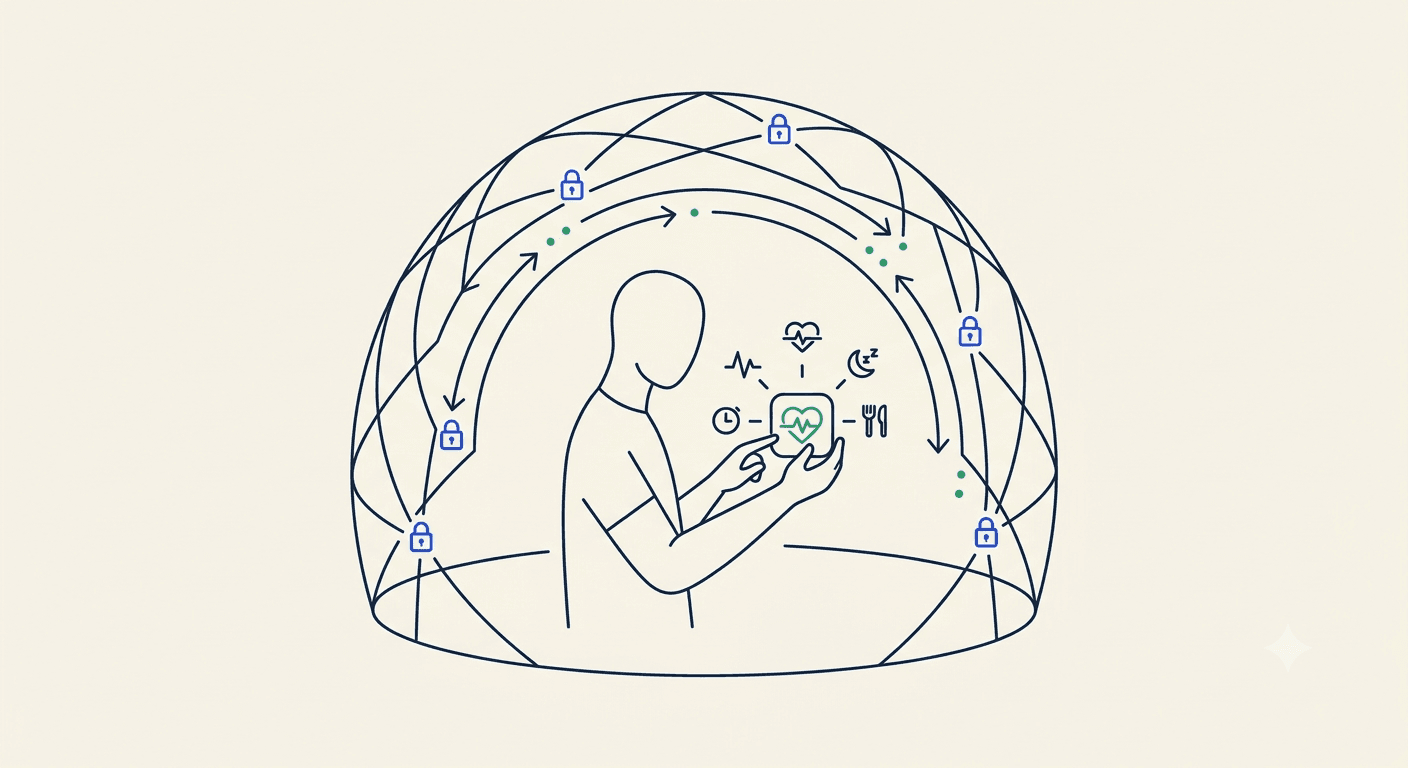
A cornerstone of privacy-centric wellness technology involves maximizing on-device computation for personalization features:
Minimizing sensitive data transmission by processing personal information directly on the user's device
Reducing potential exposure in case of data breaches by limiting centralized data storage
Building and maintaining user trust through transparent data handling practices
Facilitating privacy-by-design principles through inherent data minimization
While implementing local-first processing presents technical challenges, modern mobile devices and architectural approaches increasingly make this approach viable. Teams can leverage edge computing, selective model deployment, and efficient on-device AI to achieve sophisticated personalization while maintaining strong privacy protections.
Implementation Considerations:
Evaluate each personalization feature for local processing feasibility
Design hybrid approaches where some computation occurs locally while maintaining necessary server-side functionality
Regular assessment of processing requirements against device capabilities
Clear communication to users about where and how their data is processed
Framework 3: Outcomes Over Engagement (The Hard Choice)
The most sophisticated and ethically-aligned personalization systems fundamentally shift their optimization metrics away from traditional engagement markers like clicks, daily active users, streaks, and retention rates. Instead, these systems prioritize meaningful outcomes that genuinely benefit users' wellbeing:
sustainable adherence patterns that emerge naturally, without psychological manipulation or coercion
measurable reduction in cognitive and emotional overwhelm through thoughtful content pacing
demonstrable improvements in sleep consistency and quality over time
enhanced emotional regulation capabilities backed by validated assessment tools
quantifiable increases in users' reported sense of personal agency and autonomy
This strategic pivot doesn't necessitate abandoning business sustainability metrics entirely. Rather, it represents a conscious choice to reject the exploitation of user vulnerability as a growth mechanism, even when such tactics might drive short-term engagement gains.
In the 2026 landscape, the brands that successfully cultivate and maintain long-term user trust will be those that can make—and substantiate—this powerful declaration:
"Our personalization framework is explicitly designed to avoid exploiting moments of user distress or emotional vulnerability."
Forward-Looking Insights: What Changes in the Next 12–36 Months
The evolution of safe personalization is trending toward these critical developments:
Personalization transparency becomes a UX expectation
Users will demand comprehensive visibility into personalization decisions, with "why am I seeing this?" functionality becoming as fundamental as search or settings. This transparency will extend beyond simple explanations to include detailed insights into the logic behind recommendations and adaptations.Privacy-first architectures become a trust differentiator
Rather than leveraging privacy as fear-based marketing, organizations will showcase their privacy-centric architecture as a fundamental trust signal. This includes implementing local-first processing approaches, maintaining minimal data retention policies, and providing granular user controls over data usage.Personalization becomes more contextual, not more invasive
Advanced personalization will prioritize sophisticated pattern interpretation within ethical boundaries rather than expanding data collection. The focus shifts to deriving more meaningful insights from consented data instead of gathering increasingly intimate user information.Compliance-aware teams build earlier, not later
Legal, clinical, and security stakeholders will be integrated into the earliest stages of product definition and development, moving away from the traditional model of last-minute compliance reviews. This upstream integration ensures that safety and compliance considerations shape core product decisions.Ethical boundaries become product differentiators
Organizations will proactively publish their ethical red lines, explicitly stating what practices they refuse to implement. This includes commitments against guilt-based nudges, dark patterns, and unauthorized inference categories, establishing clear accountability to users and stakeholders.
The Bottom Line: Personalization Should Increase Capacity, Not Dependence
The fundamental principle guiding safe personalization is user empowerment. This means developing systems that enhance rather than diminish user autonomy.
A well-designed personalized wellness product should enable users to:
recognize and understand their behavioral and wellness patterns with clarity
select interventions that seamlessly integrate with their lifestyle and values
develop portable skills and insights that remain valuable beyond the app ecosystem
experience increasing levels of self-efficacy and agency over time
When personalization mechanisms begin to erode user self-trust or create dependency, they've crossed an ethical boundary—regardless of any positive impact on engagement metrics.
Safe Personalization Is the New Standard for Wellness Tech
By 2026, personalization will be non-negotiable in wellness technology. Users will expect adaptive experiences, investors will demand sophisticated differentiation, and teams will require data-driven intelligence to remain competitive.
However, wellness technology demands a fundamentally different approach to personalization compared to e-commerce or media platforms. The stakes are exponentially higher because users often engage with these products during periods of vulnerability, seeking support for coping, recovery, or stabilization.
Safe personalization represents the framework through which teams can build innovative, effective solutions while maintaining unwavering commitment to user trust:
implement data minimization as a default architectural principle
develop consent as an ongoing, dynamic system rather than a one-time checkbox
eliminate emotional manipulation and dependency-creating feedback loops
maintain vigilant monitoring of algorithmic bias and drift, treating it with the same priority as system uptime
integrate transparency and user controls as fundamental UX elements rather than afterthoughts
By adhering to these principles, personalization fulfills its intended purpose: serving as a supportive framework that enhances user wellbeing while respecting fundamental human boundaries.
Build safe, ethical personalization with CipherCross — privacy-first, human-centered, future-ready.
Dive into our diverse articles – from wellness app design and AI personalization to software development best practices, operational workflows, and strategic guidance.



Load More