
Adaptive Wellness: How Context-Aware Apps Will Transform User Habits in 2026

Mykyta Shevchenko
CEO & Co-founder
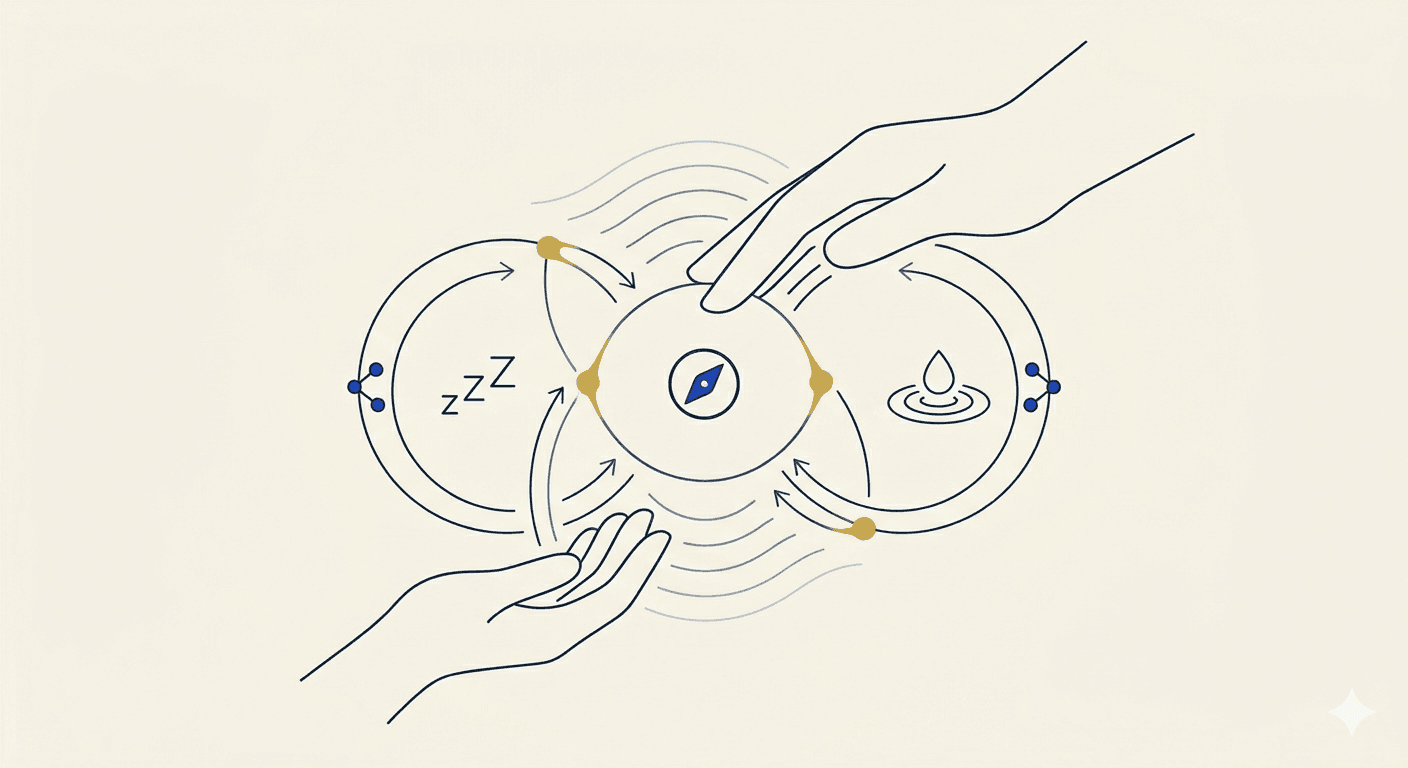
Wellness tech is entering a new stage. Not a louder one or a more crowded one, but a quieter and more intelligent one. The old idea of a wellness app — a fixed set of features, a rigid routine, a timeline of generic reminders — is fading. Users no longer want a tool that speaks to everyone at once. They want support that feels tuned to their life in a specific moment. The real shift coming in 2026 is not a new trend or a flashy feature category. It is a change in how wellness products understand context — the small but powerful signals that reveal how a person feels, what they need, and when they are receptive to guidance.Adaptive wellness is the natural next step. It is personalization that responds to real conditions, it watches patterns, interprets behavior, adjusts itself quietly, does not build the user’s life around the app, adapts the app around the user’s life. This shift will redefine how habits form. People do not change because an app pushes them. They change when support arrives at the right time, in the right tone, with the right understanding of their current physical and emotional state. 2026 will reward products that move beyond “What should we recommend?” to a deeper question: “What matters to the user right now?” This article explores how contextual intelligence will transform the wellness category — how behavior-based adjustment works, what emotional adaptation looks like, how engagement naturally grows when an app supports a person’s real-world rhythm, and why companies preparing now will shape the future of human-centered wellness technology.
1. The Shift From Static Support to Living Systems
For years, wellness apps operated like digital planners. They offered structured routines, fixed reminders, generalized insights, and a one-size pattern for every user. Even when apps claimed “personalization,” it often meant preference toggles or surface-level adjustments. But habits do not grow inside rigid systems. They grow inside environments that flex with a person’s energy, stress, timing, and emotional bandwidth. This is where adaptive wellness begins to stand apart. It views the user not as a list of goals but as a changing human being: mood shifts, workload rises and falls, motivation comes in waves, sleep quality varies. Hormonal cycles create predictable but often ignored fluctuations. Weather, social context, and even the time of day subtly influence behavior.
When a system understands these signals, everything changes. Instead of treating wellness as a strict routine, it treats it as something that moves. Something that reacts, and something that learns the user’s rhythm instead of asking the user to follow the app’s rhythm.
And this shift is not theoretical anymore, sensors are more accurate. Passive data collection is smoother. Emotion-recognition patterns are safer and more ethical, and user expectations are rising — quietly but clearly.
People want technology that understands them without asking for constant input. They want help that feels timely rather than demanding, guidance that fits the day they are having, not the day the app assumes they are having. Adaptive wellness systems look at the evolution of a person, not only the outputs they produce.
They move from:
• predictable reminders
• fixed daily goals
• static content
• identical experiences for all users
to:
• support that aligns with current context
• goals that adjust based on internal and external factors
• content that changes tone and depth with user mood
• experiences that grow unique over time for each person
The user does not feel “managed.”, and understood. This is the foundation of future engagement — not pressure, not reward loops, but alignment with real life.
2. Contextual AI: Understanding the Signals That Shape Human Behavior
Context-aware wellness depends on one thing: the ability to read what is happening around and inside a person without overwhelming them with questions. The shift in 2026 will be driven by AI systems designed to interpret subtle, multi-layered signals that earlier wellness apps ignored. Not because they did not care, but because the technology was not mature enough to understand them meaningfully.
Mood as behavioral context
Mood is one of the strongest predictors of whether a person will take action or ignore an app. A user who is anxious does not need the same type of message as someone who is energized. Passive mood inference — from gestures, typing cadence, journaling patterns, or sleep irregularities — enables adjustments without interrupting the user. Instead of “Time for your session,” the app shifts to: “You might be carrying a bit more tension today. Here’s something gentle that fits where you are.”
Physiological patterns that reveal readiness
Heart rate variability, body temperature trends, and menstrual cycle phases can signal when a user is physically primed for deep work, rest, or effort. Adaptive systems do not push high-intensity routines on an off day. They pace the person with what the body can realistically handle. The result is habit formation grounded in biological reality, not idealized expectations.
Environment and social context
Noise levels, time of day, recent activity, and even calendar patterns help predict whether a user can engage. Asking someone for a reflection exercise when they are rushing between obligations creates friction. When the app senses a busy block, it shifts to shorter, lighter interactions. Context is not only data for the sake of data. It is a lens that reveals what is appropriate for this moment.
3. Behavior-Based Personalization: How Apps Adjust in Real Time
Once an app understands the user’s context, the next step is shaping the experience based on that understanding. Behavior-based personalization is not about predicting every individual action. It is about aligning the app’s guidance with patterns that emerge over weeks and months. People think they struggle with discipline. But in most cases, they struggle with environments that do not support the habits they want. An adaptive system solves this through small but meaningful shifts.
Adjusting goals to prevent drop-off
If the system sees that a user rarely completes long tasks during weekday evenings, it will naturally recommend shorter rituals. When it notices that mornings lead to better focus, it places deeper sessions there. The user does not notice the adjustment, they just feel less resistance, and habits begin to anchor.
Tone and communication style that follow emotional bandwidth
A stressed user cannot effectively process or act upon complex instructions and detailed guidance. Their cognitive load is already high, making simplified, clear communication essential. In contrast, a motivated and energized user has the mental space and enthusiasm to engage with longer sessions and more nuanced content. This is why adaptive systems intelligently vary their tone and communication approach — sometimes softer and more nurturing, other times firmer and more directive, sometimes highly structured, and other times more flexible and flowing — all depending on the user's current emotional bandwidth and mental state.
Timing that matches personal rhythm
Many traditional wellness apps make the common mistake of pushing notifications and prompts when users are unavailable or not in the right mindset to engage. This creates friction and can lead to disengagement. In contrast, adaptive apps take a more sophisticated approach by carefully observing and learning when the user naturally and spontaneously engages with the platform.
If someone consistently checks in during late evening hours, the system recognizes and adapts to this natural pattern, shifting the entire experience to align with these preferred timing windows. When these engagement patterns evolve — perhaps due to seasonal changes or life transitions — the system flexibly adjusts its timing accordingly, maintaining that crucial alignment with the user's natural rhythm.
The app transforms from being an external force that users must accommodate into something that flows naturally with their personal patterns and preferences, reducing friction and enhancing the overall experience.
Recommending actions based on recent behavior
The system takes a holistic view of the user's recent experiences and state when making recommendations. If sleep tracking indicates poor rest quality, the system intelligently refrains from suggesting physically or mentally demanding routines. When a user shows patterns of avoiding deeper reflection exercises, rather than pushing long-form journaling or extensive meditation sessions, the system skillfully introduces smaller, more manageable micro-prompts that feel less overwhelming. For users demonstrating consistent engagement and progress, the system carefully and gradually expands the depth or intensity of sessions, always maintaining a balance between challenge and support.
What users typically need isn't an array of new features or capabilities. Instead, they need an app that truly understands and responds to their lived experience — what their week actually looked like, how they felt, and what challenges they faced.
How this builds long-term commitment
When an app consistently demonstrates its ability to adapt and respond to the user's changing needs and states, users develop a deeper sense of partnership and trust with the platform. They begin to rely on the product's ability to calibrate itself — not overwhelming them during challenging periods or under-stimulating them during times of strength and motivation.
The wellness routine becomes seamlessly integrated into daily life precisely because it feels naturally aligned with the flow and rhythm of that daily life, rather than existing as a separate obligation to be fulfilled.
This sophisticated form of personalization is what truly enables lasting habit formation — not through external pressure or arbitrary streaks, but through meeting users exactly where they are in their journey, day after day.
4. The User Experience of Adaptation: Emotion, Trust, and Safety
Adaptive systems do more than optimize behavior. They fundamentally transform the emotional relationship between people and their wellness apps, creating a deeper, more nuanced connection that goes beyond simple habit tracking or goal achievement.
Wellness depends on trust. People must feel safe. They must feel supported. They must feel that the app is not evaluating them but accompanying them on their unique journey toward better health and wellbeing. This foundational trust determines whether users view the app as a helpful companion or another source of stress in their lives.
Context-aware design reinforces this trust by carefully shaping the emotional texture of the experience, creating moments of connection that feel natural and supportive rather than mechanical or judgmental.
Safety built through clarity
When applications clearly communicate changes in their recommendations and functionality, users develop a deeper understanding of the system's adaptations. By explaining shifts in a simple, pressure-free manner, the app creates an environment of transparency that actively reduces anxiety around data collection and usage patterns.
Users embrace change when they comprehend its purpose. The fear stems not from adaptation itself, but from unexplained modifications that leave them questioning the system's intentions.
Tone that feels like care, not automation
Modern adaptive interfaces have evolved to communicate in ways that authentically resonate with users' emotional states. This creates a balanced tone of empathy that avoids both excessive warmth and cold automation. The interface speaks as a grounded companion rather than an impersonal system.
The ultimate objective is to embody a steady, reassuring presence that acknowledges and respects the user's internal emotional landscape without overstepping boundaries.
Experiences that reduce guilt and increase resilience
Conventional wellness applications often create negative reinforcement cycles through missed workout notifications, broken achievement streaks, and aggressive red alert indicators that induce shame and disappointment.
In contrast, adaptive wellness platforms eliminate these punitive elements from the user experience. When life circumstances lead to a challenging period, the system adjusts its expectations accordingly rather than penalizing temporary setbacks. This approach recognizes that sustainable engagement comes from supportive tools that acknowledge human imperfection rather than those that constantly highlight perceived failures.
Why this matters for engagement in 2026
Today's users seek more than just goal-oriented tools that push relentlessly toward objectives. They want systems that demonstrate understanding of their life circumstances and adapt accordingly to support their journey.
The wellness companies that will dominate the 2026 landscape will be those that prioritize emotional safety as a fundamental product feature rather than treating it as an optional enhancement.
5. What 2026 Will Demand From Wellness Products
While the transition to adaptive systems is currently in progress, 2026 will mark a significant acceleration of this trend. This shift is driven by converging factors including evolving market expectations, maturing technology capabilities, and changing user behavior patterns.
Industry professionals across founding teams, product development, and wellness strategy need to prepare for several critical transitions.
Users will expect contextual intelligence as a standard, not a luxury
The primary differentiator between applications will shift from feature comparisons to how well users feel understood. Products that offer genuine adaptation will stand in stark contrast to those maintaining generic approaches, with differences becoming apparent within the first week of use.
Ethical adaptation will matter as much as technical precision
Transparency in how recommendations adjust
Clarity in how signals are interpreted
Respect for user agency and privacy
Building and maintaining user trust will become a crucial competitive advantage in the marketplace.
Founders will need stronger behavioral science foundations
Artificial intelligence alone cannot create lasting healthy habits. Effective adaptive systems must be built on solid foundations of behavioral design principles, habit formation psychology, and emotionally intelligent user experience design.
Partnerships with companies that specialize in adaptive wellness will be essential
The complexity of building comprehensive adaptive systems requires specialized expertise in areas including architecture, personalization engines, context modeling, and trust-centered user experience design. Most organizations will find it impractical to develop all these capabilities internally.
Conclusion
2026 will not reward the apps that shout the loudest. It will reward the ones that listen. Adaptive wellness is not a trend. It is the next natural step in how people want to interact with technology that cares for their mind and body. Products that understand context, adjust intelligently, and respect emotional boundaries will reshape how habits form and how wellness fits into daily life.
This shift asks for thoughtful systems, stable architecture, ethical AI, and behavioral insight woven together. The companies that invest in this now will not only meet user expectations — they will define them.
Build adaptive wellness systems with CipherCross — personalized, context-aware, privacy-first.
Dive into our diverse articles – from wellness app design and AI personalization to software development best practices, operational workflows, and strategic guidance.



Load More